Pages

Wednesday, July 31, 2019

Biohazard Warning: the Plague Conduit Berzerker

I joked about not having disease rules, so Max of the Oblidisideryptch and I collaborated to throw together not only disease rules and a table of devastating plagues, but also this Berzerker conduit! Meet the Plaguezerker, malaria-ridden and oh-so-willing to give you a taste of their power. Let them in, and become host to something far greater than yourself.


Plague Conduit Berzerker
ceSar art
Death comes for all, floating on the wind or crawling up the river, in a million beady eyes and biting jaws. The greatest civilizations of the world all bow to the plague when it knocks on their door. Once you were infected, the plague decided you're more use to it alive than dead, so long as you fulfill your duty as its holy emissary. Your conduit is every drip of disease running through your veins, sloughing your skin and bleeding you dry. You revel in buboes, call yourself friend-to-rats, give mucus-alms to the hungry and wretched. The gift you bring is one of freedom; how dare any resist your plague.

(Quick reminder for the Berzerker rules: You have a conduit, and gain its Passive benefit. You have Rage Dice, which are d4s. When you want to enter a rage, roll any number of your Rage Dice. THe rage lasts for (sum) minutes. Rage Dice burn out on 3s or 4s, and only return on a daily or long rest. When you roll doubles or triples on your Rage Dice, you get the related effect from your Conduit.

While raging, you get an extra attack each round, (sum) bonus temporary Hit Points, and can use the Active benefit at the cost of cutting (dice) minutes off your rage. You can't take any actions that don't contribute to you brutally murdering things while you're raging, and it automatically expires when all enemies are dead, subdued, or driven off, regardless of how much time is left. You can try to end your rage early on a 1-in-4.)

Passive: A fatal disease has claimed you as its own. You cannot contract other diseases, and you cannot die from the disease so long as you spread it to (Berzerker level)^2 new carriers per week. You still suffer its negative effects.

Active: Force a creature you've damaged to CON save vs. contracting your disease; or if they're already afflicted force them to CON save vs. the disease worsening.

Doubles
1. Ichor floods from your mouth, eyes, and pores, creating sticky pools around you. Anyone who walks into one must STR save to unstick themself; also works as a potent adhesive. Also sticks everything you touch during your rage to you.
2. Your attacks leave poxy buboes where they land, even on surfaces. Anyone who's hit by one popping (through even the most minor of pressures) must CON save or contract the first stage of your disease. If you're hit by one, though, your disease worsens one stage (no save).
3. Your exhalations spread plague. You enter a coughing fit, gaining a breath weapon that deals 1d6 acid damage in a 30' cone and forces a save vs. a symptom of your disease. Symptoms given this way expire when your rage ends. This also deals damage to you, and you can't move on a turn where you do this.
4. The plague sees, and feels, and hates. You can sense the presence of the uninfected for 100' around any carriers you can see (including yourself). While raging, you must relentlessly attack the closest uninfected to you until they are infected, then move on to your next target.

Triples
1. Your active ability forces infected creatures that you damage to instantly save vs. the last stage of the disease, instead of just the disease progressing. This takes an equivalent toll on you; you must also save vs. your disease worsening whenever you force a save this way.
2. Your disease tears itself from your body as a ichory double that follows your orders (so long as those orders will spread the plague). It has all your abilities and is raging; all of its attacks inflict a symptom until your rage ends. You lose all bonuses from your disease while the duplicate exists, but retain the penalties. At the end of your rage, it schlorps back into your body. If it cannot rejoin you, save vs. death to your disease every daily rest.
3. When you kill someone with your disease, they rise as a plague zombie. Creatures killed by the plague zombies also rise as more plague zombies, even after your rage has ended. These zombies only differentiate infected/uninfected, so they'll attack whoever's least infected nearby. This will almost certainly include your allies, and may include you.
4. Roll twice on Doubles, both effects occur.

Saturday, July 27, 2019

The Artificer

There's been a recent influx of inventors in the GLOGosphere. B44L's Inventor, Arnold K.'s Kludger, and now I'm throwing my hat in the ring with something I've been working on for a while. Tinkering with it, with allen keys and tiny tweezers, tightening bolts and gluing joints, alloying inks and bytes into a well-oiled machine.

Artificer
"Deus ex machina? Then what does that make me?"

Level 1: Fixer, Inventor, 2 Blueprints, d6 Creation Die
Level 2: Overcharge, Rigger, +1 Blueprint, d8 CD
Level 3: Kitbash, +1 Blueprint, d10 CD
Level 4: Strange Mood, +1 Blueprint of choice, d12 CD

Hit Die: d4
Starting Equipment: Toolkit (inc. screwdrivers, chisels, handsaw, tweezers, wrenches, etc.), crowbar, sketchbook of diagrams, charcoal pens, large backpack (+3 inventory slots) full of 3 slots of materials (roll on table)
Skills (roll 2): 1. Alchemy, 2. Architecture, 3. Art, 4. Clockmaking, 5. Engineering, 6. Lore, 7. Mathematics, 8. Merchantry, 9. Natural Philosophy, 10. Sculpting, 11. Tinkering, 12. Use Rope

Fixer: With the right parts, you can repair mundane items to brand-new. Takes an hour at least if the original parts aren't all there; longer for larger or more broken objects.

Inventor: You've studied how to build complex machines from raw materials. Each machine has a Blueprint, a list of Descriptors, and some Functions. When you roll to learn a Blueprint (either at character creation or on level-up), roll your Creation Die on the Blueprints list.

Blueprints define the basic structure of the creation. Use your CD if you need a damage die or some other measure of effectiveness, roll CD with disadvantage if you're using it outside its functions.

Descriptors are adjectives and phrases applied to the creation, based on the materials used in its construction.

Functions are things the creation can do by default. All creations have a base function listed on their Blueprint, that you can modify. Adding additional functions requires more materials.

When you want to build a creation, select at least as many slots of raw materials as the Blueprint requires and roll your Creation Die for each one. If you roll a 6+ for that material, you can add a Descriptor based on the material to the creation. If you roll a 1 or a 2, you can add an additional Function based on the material to your creation. No matter the results of the rolls, you create it and consume all the materials you used in the process.

Building a creation takes 1 hour per CD. You can choose to do a rush job and complete it in 10 minutes per slot of material, but it will break irreparably within 24 hours or the first time you critically fail while using it, whichever comes first.

Sample Materials
1. Base metal (iron, copper, tin, etc)
2. Refined metal (steel, bronze, etc)
3. Precious metal (silver, gold, platinum, etc)
4. Wood
5. Clockwork
6. Preserved animal parts (leather, bladders, bone, etc)
7. Cut gems
8. Raw gems

Blueprints
1. Tool (3+ materials): Held, lets you apply force to objects. A shovel, a sword, etc.
2. Garment (3+ materials): Worn, gives you a passive bonus. Armor, a cloak, etc.
3. Vessel (1+ materials): A bottle of something. Consumed on use.
4. Gauge (2+ materials): Measures something. An hourglass, a telescope, a thermometer, etc.
5. Launcher (4+ materials): Fires something at range; whether that be a material used in its creation or whatever you put in it.
6. Apparatus (5+ materials): Exists in place, can be disassembled and moved. A shelter, a workbench, a printing press.
7. Transport (5+ materials): Moves under its own power, is directly controlled.
8. Material (2+ materials): Fuses the properties of its components. Always provides a descriptor or a function (your choice) to follow-up creations.
9. Homunculus (4+ materials): Moves under its own power and follows simple directions.
10. Prosthesis (4+ materials): Is fused with a living creature and acts as a limb or organ.
11. Life (6+ materials): A nonsapient creature that moves and acts of its own accord.
12. Mind (8+ materials): An inanimate thinking machine with the reasoning powers of any mortal.

Overcharge: You can destroy an item as you use it to vastly increase its efficacy. Make all rolls involved in its use with double advantage (roll three times, take highest).

Rigger: You can set up networks of tripwires and pressure plates (etc) that activate your creations in response to the environment. 1 slot of materials becomes CD triggers. The materials are consumed, and the triggers break on activation.

Kitbash: With 1 slot of relevant materials to bridge the two, you can combine two of your creations into something greater than the sum of their parts. Each additional creation you add costs additional slots of materials equal to the number of creations already kitbashed together.

Strange Mood: You are Inspired. The plans for something brilliant and utterly new spring into your mind, and from your mind to a dozen notebooks. It is your life's work, your ultimate ambition, an idea so powerful that because it does not yet exist you must work tirelessly to bring it into being. You get to invent something entirely new of your choice. It will work. The GM will tell you what you need to make it. Go forth and do so.

Monday, July 22, 2019

Violence is Never the Answer but Always an Option


My Turning People Into Corpses post is popular and gets linked around every so often, but is actually pretty outdated. I've overhauled the combat in Mimics & Miscreants a few times now, and I think it's at the point where it's stable enough for me to make a new post. It shares the chit initative, multiple choices defenses, and dismemberment tables of the original version, but has been refined in several important ways that I comment on below.

Initiative
Everyone in the combat gets a chit. Draw chits out of a bag at random; whoever’s chit is drawn takes their turn. When the bag runs out of chits, put all the chits back in and start a new round.

This doesn't depend on DEX anymore, and everyone gets a turn every round. If you want to go first, get a surprise round; otherwise it's anyone's game.

On Your Turn
Can attack and move, or do something else and move, or attack and do something else. Casting a spell or spell-like ability takes your whole turn.

This hasn't changed. Speed is whatever makes sense for your game, I always run combat in theater of the mind (or with minimal visual aid) so actual distances don't quite make sense for me. If you want, use the default 30ft walk/60ft run distances, modified as appropriate by folk and calling.

Fighting 
Attacking: Roll d20+your attack ability (Strength in melee, Dexterity at range, Intelligence for spells, Wisdom for miracles). If your enemy has Armor, you have to meet 20+Armor instead of just 20.

Mimics & Miscreants is now modifierless and sum-to-20. Roll a d20, add the whole appropriate ability score, and see if you meet or beat 20. If you do, you succeed.

If you hit, roll damage. If your enemy has taken more damage this round that their Armor, Wound them. If you fail, they can Take It or Dodge. Natural 1s always miss, and natural 20s roll double damage dice.

Armor now also negates Wounds, in a way I borrowed from the excellent card game Keyforge. Once you've taken more damage than your Armor, you'll start getting Wounded; this refreshes each round. Heavy armor is good against one person, but you'll be overwhelmed by hordes or barrages.

Stunts: When you attack, if you want to do something more complicated with your attack (like tripping, shield sundering, pushing, called shots…), you can Stunt. To Stunt, attack with disadvantage, but inflict that extra effect if you hit (in addition to damage).

No one Stunts in my games. I don't know how these rules hold up in play.

Unarmed Attacks deal d4 bludgeoning damage by default. If you're dual-wielding, you can make 2 attacks per turn, but you step down your damage dice.

Defending: Roll d20+Dexterity+Armor. If you succeed, you can Dodge or Take It. On a 20, you also get to take an extra turn afterwards. On a 1, they crit you for double damage dice. If you fail, the enemy rolls damage and Wounds you if the damage is greater than your armor.

Only the players roll in this system. If you want enemies to be more accurate, you can impose disadvantage or other penalties on Defense rolls. One of my philosophies is that players shouldn't just be sitting there listening to the GM recite numbers, because I've been both a player and a GM in that situation and it's boring no matter which side of the table you're on. Players also like rolling dice, no matter what OSR theorists like to say about rolling as few dice as possible, and I'm here to give them their polyhedron fix.

Dodge: Take no damage and move 5'. If you can’t move 5’, you can’t dodge.

You can choose to either evade all the damage or take some of it. If you're surrounded, you'll have to start taking damage. Making Dodging a viable but not ideal option is one of the trickiest problems I've faced in this system, and I'm still not convinced I've cracked it.

Take It (melee): Both sides deal damage, rolled with disadvantage.

This is why you'd choose to take damage - you get to hit back. It's less likely to Wound, but still can chip away (or, with a lucky roll and large enough weapon, inflict some serious damage). Gives players something to do when attacked, which is nice.

Take It (ranged): You take damage (rolled with disadvantage), and can shoot back if you have a ranged attack. This can keep going until someone dodges or dies.

I haven't tried this yet in play. Might need tweaking to prevent endless ranged duels, or maybe those are fun enough to keep this as part of the system.

Parrying: If you’re wielding an item that lets you parry (like a rapier or a buckler) when you Take It in melee, you can make a regular attack back. If you hit, you deal damage and take no damage; if you miss they must Take It - or parry back!

This now extends Taking It, and gives faster characters a choice instead of just dodging every attack. Obviously if you can't parry (hi Wizards), you'll just dodge, but thieves and rangers and everyone addicted to rapiers because they're so powerful in 5e are going to have a good time.

Resting
A short rest takes 10 minutes of downtime and consumes 1 ration. You may spend a Hit Die to roll it and restore that much HP. Heal 1 ability damage. -d4 Stress.

A daily rest takes 8 hours of sleep and downtime and consumes 1 ration. Roll any HD you have left to heal HP, then regain all spent HD. Heal 1 HD of ability damage. -d8 Stress.

A long rest takes a week of sleep, shelter, downtime, and full meals. Set your HP to maximum, roll all HD and heal that much ability damage, set Stress to 0.

One of the big changes to Wounds is that they're all based on damaging ability scores now. Instead of healing discrete wounds (which made little sense with lost body parts), you now just heal the mechanical damage.

Hit Points and Wounds
HP represents your ability to shrug off major damage. You can keep fighting until your wounds become incapacitating. You might not want to. At character creation, you start with 1 Hit Die, which by default is a d6. You spend and roll Hit Dice to restore HP. Some Callings or Folk modify the die size. Some Callings also gain more Hit Dice when you level up.

When you’re wounded by a hit, if it reduces you to ≥0 HP and you've taken more damage this turn than you have Armor, take a random Minor Wound from the appropriate damage table. If it reduces you to <0 HP, take a random Major Wound instead. Whenever you take a Major Wound that you’ve already taken this combat, save vs. death.

Wounds now aren't based on the amount of damage dealt, they're rolled on a table (because I love me my random tables) and you don't instantly die at -10 anymore. Instead, you have to abrade your opponent's hit points, then overwhelm their armor to inflict Major Wounds and finish them off.

Physical Wounds
Bludgeoning
Minor
1. Knockdown. They fall prone; can’t dodge, crawl half speed, disadvantage on attack/defense, take move to stand
2. Disarm. Knock their weapon out of their hand. If they can’t be disarmed, reroll.
3. Fractured arm. -1 DEX, disadvantage on attacks (hit ends)
4. Hobbled leg. -1 STR, CON save to move (save ends)
5. Rattled. -1 INT, -1 WIS
6. Sundered. -2 Armor, this breaks shield if they have one (if they have no shield or armor, reroll).

Major
1-2. Concussed. -2 INT, -2 WIS, -2 CHA. Save vs. unconsciousness.
3-4. Bones shattered. Leg or arm becomes unusable. -2 STR. Save vs. knockdown and halve speed if leg, -2 DEX if arm.
5-6. Organs pulped. -4 CON.

Piercing
Minor
1. Bleeding. Next attack deals damage with advantage.
2. Pinned. If you leave your weapon in, you can disable their arm/leg while it’s in. Removing it gives -2 CON.
3. Punctured guts. -1 CON, -1 STR.
4. Eye gouged. DEX save vs. blinding (save ends). Disadvantage on attacks (hit ends).
5. Laceration. Hurts like hell, take 1 fewer action next turn or d3 damage.
6. Armor penetrating. -3 Armor against your attacks.

Major
1-2. Lose an eye. -2 DEX, -2 CHA, disadvantage on tasks that need depth perception.
3-4. Punctured lung. -1 CON whenever you make a physical test.
5-6. Skewered. -3 CON, pinned to whatever’s behind you, whatever’s behind you takes half damage from the attack.

Slashing
Minor
1. Tendon severed. Disadvantage on attacks or CON save to move (your choice).
2. Laceration. Hurts like hell, take 1 fewer action next turn or d3 damage.
3. Finger loss. DEX save vs. disarm, -1 DEX.
4. Sliced. Chunk of them falls off. -2 max HP (heal as ability damage).
5. Cleaved. Attack keeps going to adjacent enemy, deals half damage to them.
6. Facial scar. DEX save vs. blinding (save ends). -2 CHA.

Major
1-2. Lose an arm. -2 DEX, -2 STR, one fewer arm.
3-4. Gaping wound. -3 CON; each turn it goes without medical attention take -1 STR and -1 DEX.
5-6. Lose a leg. -4 STR, knocked down, one fewer leg.

Firearm
Minor
1-2. Holed. Next attack deals damage with advantage.
3-4. Deafened. Save vs. deafening (save ends), -1 INT, -1 WIS from ringing in ears.
5-6. Embedded. -1 DEX, CON save to move (save ends).

Major
1-3. Organ ruined. -3 to a random ability score, gain d6 Stress.
4-6. Blown apart. Lose a (d6: 1. hand, 2. arm, 3. leg, 4. eye, 5. ear, 6. jaw).

Elemental Wounds
Acid
Minor: Etched. -2 Armor, can go into negatives. Healed as ability damage.
Major: Scoured. d3 items are melted away.

Cold
Minor: Chilled. -1 DEX. stuck to whatever you’re touching. STR save to break free.
Major: Frostbitten. -2 DEX. STR save to move, attack, or defend until rest.

Fire
Minor: Scorched. -1 CON. 1 random flammable object burns away.
Major: Blazing. Inflict Scorching each turn until fire is put out.

Lightning
Minor: Shocked. STR save vs. disarm. -1 STR and -1 DEX. -2 STR and -2 DEX if wearing metal armor.
Major: Paralyzed. -2 STR, CON save vs. paralysis (save ends). If wearing metal armor, fail the first save.

Necrotic
Minor: Withered. -1 STR, -1 DEX, -1 CON.
Major: Aged. -1 to each ability score.

Psychic
Minor: Panicked. -1 WIS, gain d6 Stress.
Major: Traumatized. -1 INT, -1 WIS, -1 CHA, gain d6 Stress.

You can adapt my Esoteric Wounds simply by making the 0-4 wound the Minor Wound, the 5-9 one the Major Wound, and the 10+ one an effect on death.

Thursday, July 18, 2019

Pay Your Late Fees: the Book Wizard


"Knowledge = power = energy = matter = mass, and on that simple equation rests the whole of L-space.  It is via L-space that all books are connected (quoting the ones before them, and influencing the ones that come after).  But there is no time in L-space.  Nor is there, strictly speaking, any space.  Nevertheless, L-space is infinitely large and connects all libraries, everywhere and everywhen.  It’s never further than the other side of the bookshelf, yet only the most senior and respected librarians know the way in." - Terry Pratchett

The library is as inextricable from the wizard as the battlefield is from the fighter or the shadowed alley from the thief. A wizard's book is a fighter's blade is a cleric's unshakable faith. Knowledge is power, power is energy over time, and so books are incredibly dense repositories of magical energy merely waiting to be unleashed. Wizards have known this since time immemorial (they did not invent the book, but that is only because no one before books could credibly call themselves a wizard). Yet knowledge is useless without those willing to care for it. Wizards who devote their talents to the study, keeping, and cataloguing of arcane tomes (and scrolls and records and tablets, to name only a few of the esoteric media one can find in a proper wizard's library) are Book Wizards, and their powers command the respect of all their peers.

A book wizard's brain is a library in itself, book-neurons meticulously organized on shelves of grey matter. If you were to shrink down to the size of a cell, and were very very quiet, you could ask the librarian of the wizard's brain where to find choice memories and skills, and check them out for your perusal.

A quick tangent on Memory Slots, which I use in a few of these spells: Like how you have physical inventory slots equal to your STR score, you have mental inventory slots equal to your INT score. A skill or a language takes up 1 slot, prepared spells take up 1 slot each, magic dice take up 1 slot each, and anything you want to remember perfectly (i.e. ask the GM "hey, what was that thing..." and get a complete, fully truthful answer) takes up a slot as well. You can still take notes; your player memory doesn't affect your character memory or vice versa. Stress also takes up slots; 1 slot per 3 Stress. If you overencumber your memory, you forget one random slot's worth of useful info (i.e. not Stress) as you sleep.

Book Wizard
art by juliedillon
"1) Silence; 2) Books must be returned no later than the last date shown; 3) Do not interfere with the nature of causality" - Terry Pratchett

Perk
You have INT/3 extra physical inventory slots, but only for books/scrolls/other media. Start with 3 random mundane books, each with 2d1000 pages.

Drawback
You regain MD by reading books you haven't read before, instead of during rests. One inventory slot's worth of reading material restores 1 MD.

Cantrips
1. If you're using a book as a weapon, it deals d4 bludgeoning or slashing damage (your choice), stepped up once for every thousand pages it has.
2. You can spend an hour talking with a magic-user (or to yourself) to convert one of their spell slots into a scroll of a spell they know. They get the slot back when the scroll is used.
3. You can flip to the page you want in any book on the first try, even if you haven't read it before.

Spells
1. Hit 'Em With The Book
Range: 10'; Target: 1 creature; Duration: instant
Throw (dice) books within range at the target for (sum) bludgeoning damage. You may apply additional effects based on the topic or plot of each book; the target gets a save.
1. Almanac: Cause a seasonal effect around the target for a round (spring: hyperallergenic pollen, summer: blinding light, fall: strong winds, winter: freezing cold)
2. Dictionary: Target can speak and understand (though not read or write) only the language of the dictionary for (sum) minutes.
3. Epic: Reroll (sum) with stepped-up damage dice.
4. History: Target acts stereotypically of their social class for (sum) rounds.
5. Law: Attack deals an additional d6 damage if target has broken the law.
6. Medicine: You can choose the wound this attack inflicts.
7. Novel: If you haven't read this book yet, the attack deals double damage.
8. Play: Target is overcome with mirth (comedy)/lust (romance)/sadness (tragedy) to the exclusion of all else for (sum) rounds.
9. Religion: Attack deals a damage type associated with the religion.
10. Technical: Target has advantage or disadvantage (your choice) on their next test of a skill in the book.

2. Animate Book
As Animate Object, but only for books. Their attacks apply effects as Hit 'Em With The Book, and can speak their contents upon request.

3. Comprehend Languages
Range: self; Target: self; Duration: (sum) minutes
You understand the literal translation of (dice) languages of your choice. You can't speak or write the languages, only read and understand them. This extends to things beyond spoken/signed/written language - design languages, animal languages, etc. are all valid selections for this spell.

4. Enforce Trope
Range: sight; Target: (dice) creatures; Duration: see description
The results of the target's next (dice) rolls are whatever is narratively expected for maximum suspense and drama (based on whether they succeed or fail). 2 or more dice: you can pick the genre the tropes follow; 3 or more: you can pick a specific story; 4 or more: you can pick the exact tropes.

5. Book Learning
Range: touch; Target: up to (dice) books; Duration: until forgotten
Read the targeted books into your brain instantly (this doesn't destroy the books). They take up 1 memory slot each, and you have perfect recollection of all of its contents and can recite them with total accuracy. If it has pictures or diagrams, you can reproduce them with total accuracy as well. When you would use a book for a spell, you may choose to forget one of those books to manifest a magical copy of it instead, which then is used for the spell (and consumed after the spell ends). If there are spells in the books, you can cast them as scrolls with the (dice) and (sum) rolled for this spell. Casting one of those spells causes you to forget the book.

6. Silence
Range: 100'; Target: up to a (sum)*10' radius sphere; Duration: (sum) minutes
Target area becomes magically silent. No sound is produced within the sphere, nor can any sound enter it from outside. You can move the sphere anywhere within range and change its size at will.

7. Infodump
Range: 100'; Target: (dice)*10' radius sphere; Duration: (sum) rounds
The contents of an entire book manifest in the target area, freefloating words and paragraphs buzzing like angry hornets. They try to overwrite all information that enters the area, including others' memories. All books in the area are overwritten with junk data from the book you chose over the course of the duration. Anyone in the area must WIS save or have a chunk of the book forcibly jammed into their head each round, replacing their most valuable memory slot (spells > specific memories > skills > languages). This consumes the book.

8. Edit Spell
Range: 10'; Target: a spell; Duration: instant
Target a spell either in your head or in the world. You may add (dice) words to or subtract (dice) words from its description. GM interprets how the new spell acts.

9. Summon Fictional Character
As Summon Creature, but summons a character from a book in your possession (stat them up using the Summon rules, or as a hireling - whichever makes more sense). Consumes the book.

10. Literary Teleport
Range: touch; Target: book; Duration: (sum) rounds (1D)/minutes (2D)/hours (3D)/days (4D)
Turn the targeted book into a linking book that lasts for the duration. It teleports those who touch a specified paragraph in it to the location that paragraph accurately describes (if a location that's either fictional or no longer in existence it's instantiated in a sub-dimension; if a real location, you end up there in the real world). When the duration expires or the book is destroyed, everyone who was teleported is rudely yanked back to the book's location, sans anything from the destination.

Emblem Spells
11. Scrollify
As Spellify, but encodes the target into pages of a book instead of your mind. It overwrites 10^(HD) pages of the book, and if you don't have enough space the spell fizzles. Any of the Reverse Possession results that might affect your mind affect the book instead.

12. Query the Library
Range: n/a; Target: book; Duration: permanent
Describe a book, by content or title, which you then check  out of the Stygian Library from a depth of (sum) or less (basic information: depth >=0, specialist: >=5, obscure: >=10, forgotten entirely: >=15, unknown: >=20). Its text replaces that of the target book. It can be turned into a linking book with Literary Teleport that teleports you to level (sum) of the Stygian Library. You cannot cast this spell again until you have returned the book to the Stygian Library (late fees are d6 HP per week after the first). You'll need to find the Help Desk to return it properly; merely dropping it off isn't enough - and if you go more than a month without returning it, you'll anger the librarians. Don't anger the librarians.

Mishaps
1. Papercut! Take d6 slashing damage.
2. Eyestrain. You can't read small type for the rest of the day.
3. Loud noise becomes physically painful to you. Any noise above a whisper forces a WIS save or -1 WIS for the rest of the day.
4. Polymorph into an animate book about yourself for d6 rounds.
5. One book on your person, besides your spellbook, tears itself free and (ahem) books it to the nearest library.
6. You've come down with a bad case of poetry. Speak in rhyme for the rest of the day. Take 1 damage whenever you don't.

DOOMS
1. You forget who you are and take on the persona of the author of a random book you're carrying for 24 hours. Their skills and abilities replace yours.
2. Lose your episodic memories. Hope you've been keeping a good diary - you don't know anything about who you are, where you are, what you've done, or who these heavily-armed randos around you are.
3. Lose your faculties of language forever. You cannot hear nor speak, read nor write, convey information or interpret what others convey to you. Naturally, you lose your powers of wizardry. However, druids see a fallen Book Wizard as a hero who has successfully cast off the greatest shackle of civilization, and they may have a place for you...

Sunday, July 14, 2019

Dirty Deeds (Done Dirt Cheap)

art by Morten Skaalvik
XP has always been a fraught issue in my games. I don't like tracking any sort of granular XP system, whether that's killing enemies or GP=XP or any number of more complicated systems, because math is hard. I don't enjoy systems where you check off a bunch of small boxes at the end of the session, either, because too often the list of ways you get XP there are arbitrary and don't give a sense of accomplishment. This has left me with milestones, handing out levels even more arbitrarily when I feel like the party needs to level - or more often, when the party reminds me that they haven't leveled up and they really want their next class abilities. Here's a better way, heavily inspired by diregrizzlybear's Titles, where players have concrete goals that work narratively and require much less bookkeeping - I'm going to try this in whichever campaign I end up running next.

To level up, you must accomplish (total level+1) unique deeds. Any deeds from the Heroic list or deeds from the class you want to level in count.

Any particular situation can only count for one deed, so if you steal something valuable as part of a major con, you can count it for either one of those thief deeds but not both. Your GM has ultimate veto power, and deeds are left purposely vague so that they can adjust their scale to meet the desired power level and setting of their game.

If you're leveling with a deed that you used in a previous level, it must be bigger and more impressive. To obtain all 4 class templates, you'll need to perform 9 feats.

If you want a game that levels to 10 instead of 4 (like GLOG), you can instead set the number of deeds needed to level up to (current level)/2 rounded up (so 1 and 2 need 1 deed to level up, 3 and 4 need 2, 5 and 6 need 3, etc). To hit level 10, you'll need to perform 25 feats.

As an example: Ir, a 2nd-level kobold artificer, has completed a BIG PROJECT (artificer deed), and explored somewhere new (a Heroic deed). In the process, she also stole something valuable (a Thief deed). Even though she has 3 deeds, she can't level up, because she doesn't have 3 deeds for artificer (only the BIG PROJECT and the exploration), or 3 deeds for Thief (the stolen valuables and the exploration). She's going to have to accomplish another Heroic deed if she wants to be able to choose which class she wants to level in when she levels up, or go for a class-specific deed if she already knows which she wants to level.

These are intended for Mimics & Miscreants, but can be easily adapted for any system - just have 3 Deeds for each class, and a set of Heroic deeds that fit the tone and setting of your game.

Heroic (anyone can do these)
Save people
Recover a hoard
Gain allies
Explore somewhere new
Have your story told
Change the world

Fighter
Slay something big and dangerous in a stand-up fight
Lead a fighting force to victory
Find and wield a legendary weapon

Thief
Steal something valuable
Pull off a major con
Cheat death

Cleric
Spread or preserve your religion
Recover an artifact sacred to your faith
Create and popularize a religious work

Wizard
Discover a secret of the universe
Gain control of powerful magic
Do something risky and novel with magic

Adept
Perform an impossible feat
Find harmony with the world around you
Win a fair fight against someone of equal or greater skill

Artificer (coming soon!)
Build something with a rare material
Complete a BIG PROJECT
Popularize a novel invention

Barbarian
Slay something big and dangerous in a stand-up fight
Lead a horde to glory
Crush your enemies, see them driven before you, and hear the lamentations of their women

Butcher
Prepare and eat a rare creature
Serve a feast to the masses
Serve a feast to someone of importance

Jack
Defeat a dangerous enemy without fighting
Make one of your lies believed by many
Gain a powerful ally

Paladin
Slay a dangerous enemy of your faith
Recover a sacred artifact
Spread or preserve your religion

Ranger
Preserve the wilds
Survive against all odds
Tame a rare and dangerous creature

Sorcerer
Do something risky and novel with magic
Achieve a life goal of yours through magic instead of hard work
Experience rare and powerful magics

Sunday, July 7, 2019

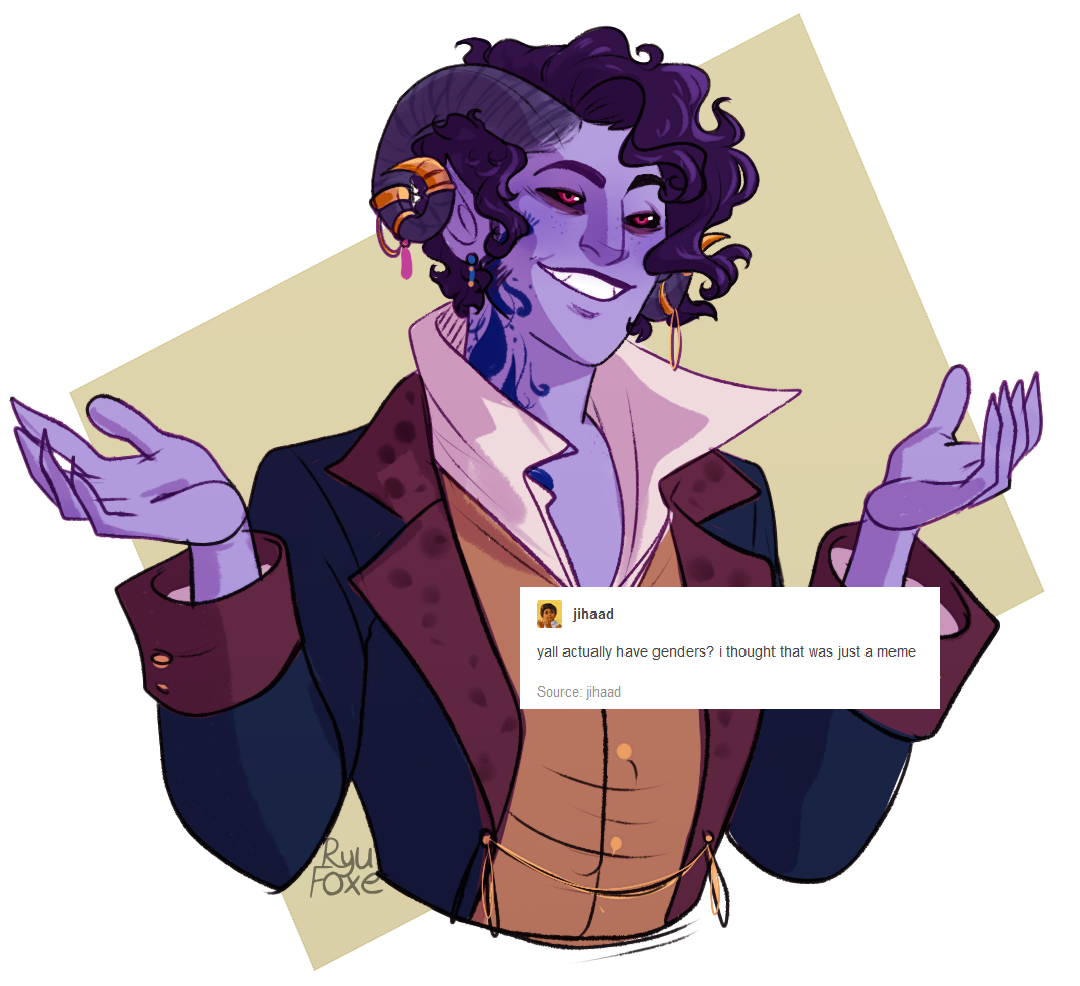
YOU MUST SOCIALLY CONSTRUCT ADDITIONAL GENDERS

Image result for genderqueer dnd character art
(from mollymaukandmayhem, art credit to ryuichifoxe)
Pride Month is over, but that just makes July LGBTQ+ Wrath Month. Can't wait for Lust Month, Greed Month, Gluttony Month, Envy Month, and Sloth Month.

Here's a few tables about gender! If you want your character to have a more complicated gender history than "man" or "woman", try rolling on these for some neat results that include a lot more experiences with gender than most tables I've seen online.

(None of these lists are exclusive;, and people often have lots going on with their gender at different times in their life. There is no one trans narrative that fits all, or most, or even more than a few people's experiences.)

Some of this terminology won't be familiar to readers who aren't entrenched in the trans community. Here's a quick glossary:
(gender)-aligned: Similar to a gender, but not quite there. Maybe you like being treated as that gender, but don't feel like you are that gender.
Assigned gender: what the midwife said you were when you popped out of the womb or were found lost in the forest, and/or what your parents raised you as.
Binary & nonbinary genders: The two binary genders are man and woman. Not actually opposites, despite populat opinion. Nonbinary genders are any gender that isn't always and exclusively a binary gender; includes fluid genders, genders beyond man and woman, multiple genders at once, lack of gender, etc.
Closeted: You know you're trans, but you haven't come out publically yet.
Egg: You have confusing feelings about your gender - maybe you feel like life would be better/easier as a different gender, or that you wish people would treat you differently, or you dislike gendered qualities of your physical appearance - but haven't realized you're trans yet.
Genderfluid: Your gender changes depending on the day, situation, or other criteria.
Physical & social transition: Physical is all the medical stuff (hormones, surgeries, hair removal, etc). Social is all the interpersonal stuff, changing name/pronouns, clothes, etc. None of this is strictly necessary for transition.
Stealth: You know you're trans, but you present as your gender in all circumstances and no one in your public life knows your gender history.

Roll on the first table, then on the second one to figure out which gender(s) your character is. If an assigned gender is implied, figure out what gender that is yourself (it doesn't have to be a binary gender, these are for fantasy games with plenty of fantasy cultures). If you're not sure what pronouns your character would use, or you want to determine that at random, roll on the third table - pronouns don't have to line up with gender.


What's up with your character's gender?
1. (gender), egg
2. Has realized they're (gender), but don't know how to come out
3. Knows there's something up with their gender but have put that on the backburner until they're in a more stable place
4. Out as (gender) to some people in their public life, but not others.
5. Out as (gender), but reconsidering their label to something more specific
6. Out as (gender) again after recloseting for d12 years after coming out the first time
7. Thought they were (gender) for a bit but unsure, taking baby steps of presenting and seeing what feels right
8. Still unsure what their gender actually is, uses assigned gender and pronouns by default
9. Does not understand gender at all, refers to everyone with they/them pronouns or by name, including themself
10. (gender), but magically or spiritually counts as a different gender
11. Identifies with assigned gender but enjoys presenting as (gender)
12. Adventures as (gender), uses assigned gender in public life
13. Adventuring for money/resources to transition to (gender)
14. (gender), intentionally visible
15. (gender), stealth
16. (gender) around partner and close friends, (gender) in public life
17. (gender), but presents as (gender) instead by choice
18. (gender), currently physically transitioning
19. (gender), currently socially transitioning
20. Roll d4+1 times, gender is complicated

Genders!
1. Binary man
2. Binary woman
3. Man-aligned
4. Woman-aligned
5. Boi
6. Femme
7. Butch
8. Tomboy
9. Agender
10. Maverique
11. Cultural gender (make one up if your character is part of a fantasy culture)
12. Sexuality as gender
13. Genderqueer
14. Genderfuck
15. [word]gender
16. Class as gender
17. Job as gender
18. Roll twice, bigender
19. Roll d4+1 times, polygender
20. Roll d4+1 times, genderfluid

Pronouns
1. They/them/theirs
2. She/her/hers
3. He/him/his
4. Find a set of neopronouns you like
5. Any pronouns, no preference
6. Any pronouns, roll again for which one is preferred
7. Roll twice
8. No pronouns, use the character's name instead

Thursday, June 27, 2019

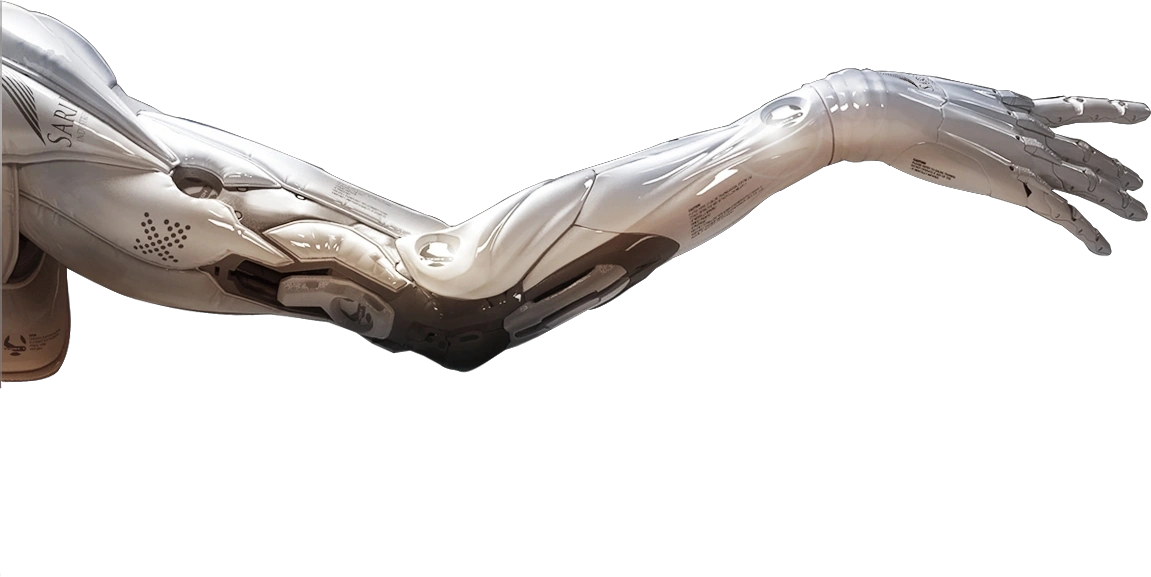
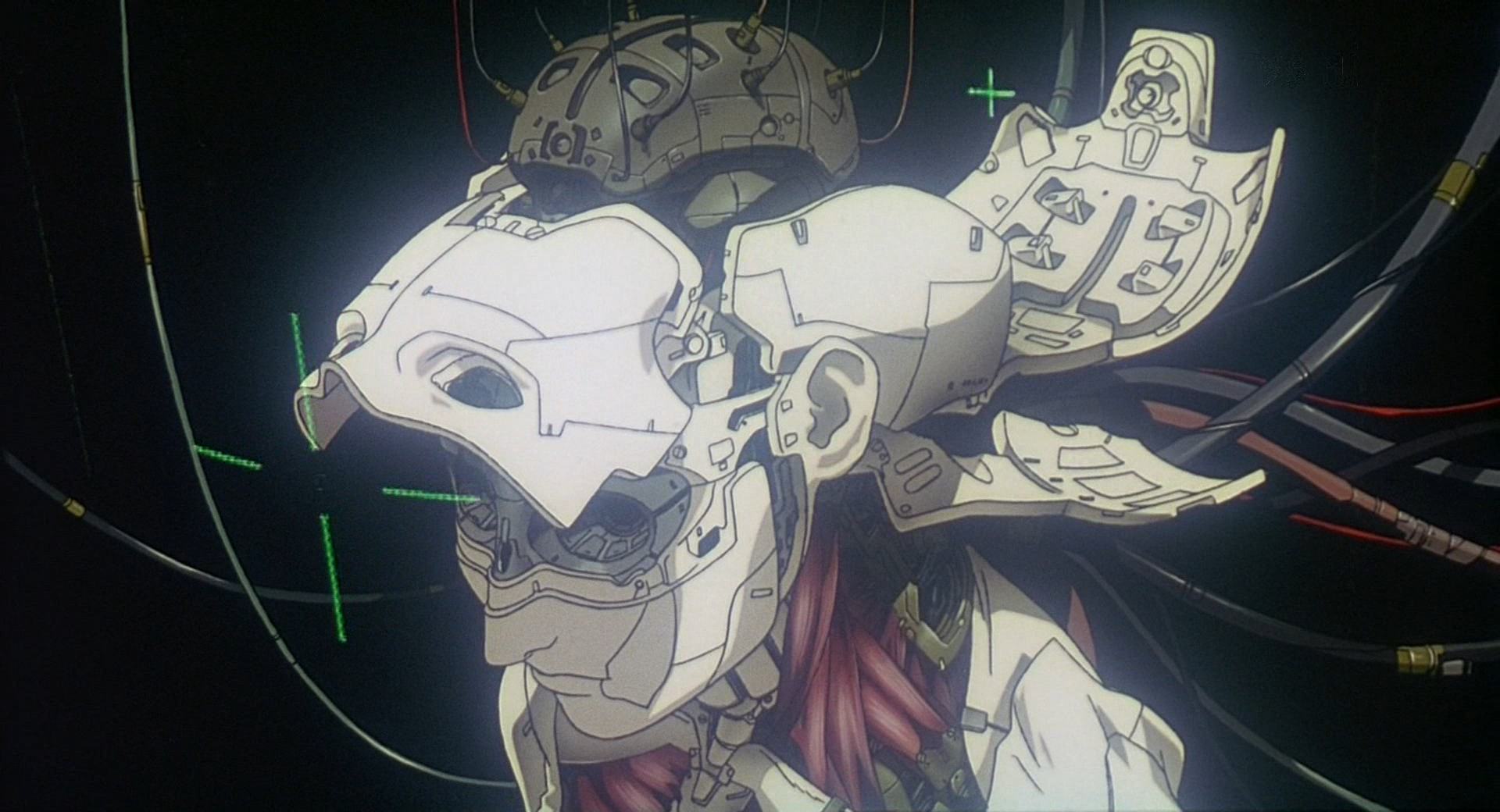
Cybernetics (You Never Asked For This)

Image result for cybernetics art
I have issues with how games like Shadowrun and Cyberpunk 2020 handle the mechanical tradeoff between augmentations and being made of the meat you were born with. Some sort of abstract degrading "humanity" stat brings a whole host of philosophical questions into play, with answers that either constrain the thematic space of the game to TECH = EVIL or are just plain ableist (people with prosthetic limbs are less human? please stop). Some newer games, like Hard Wired Island, make the downside of tech explicitly that it's expensive - and while that's miles better, it's still not particularly satisfying to me, because even under Fully Automated Luxury Gay Space Communism there's still gonna be some sort of tradeoff.

Here's an alternative: tech is complicated! Anyone who's worked with intensely customized systems, built their own PC, compiled their own Linux kernel (please don't nitpick my incredibly limited Linux knowledge in the comments), or just had to check the side effects and interactions of multiple medications knows that this shit is difficult and often requires compromises just to stay functional. When you're fitting a bunch of electronics directly into the human nervous system, you combine the most complicated parts of all of the above, and glitches are bound to emerge.

Stuff that doesn't need any extra neural integration to work and just runs off of existing wiring - like prosthetics and cosmetics - doesn't strain your system in this way. They've ironed out those kinks. Anything that gives you superpowers, on the other hand, is annoyingly buggy and high-maintenance.

Cybernetics Rules
Related image
Every cybernetic augmentation has a Strain level. When you're making a check with your augmentations, roll an additional d20 for Compatibility. If you roll under your total Strain, you Glitch. There's a variety of ways to compensate for Strain, including compatibility-forcing drugs like Neuropozyne, buying all your augs from the same manufacturer, or spending hours upon hours each day reconciling patches and bugs before they fire.

For every hour of aug maintenance you undergo per day, you can subtract 1 from your Strain that day, to a minimum of 1 per augmentation. Characters with relevant skills (like Biology, Programming, Surgery, or Electrical Engineering) can make a check to decrease it further. You don't have to be the one maintaining your augs, and many pro aug-thletes and corporate supersoldiers have teams of docs and technicians devoted to maintenance during their designated sleeping hours.

For the less technically gifted, or merc in a rush, Neuropozyne is a highly-addictive prescription drug tightly controlled by major pharmacorps. Each dose allows you to ignore Compatibility rolls when using one aug of your choice for 24 hours by selectively overclocking your nervous system. Make a CON save vs. chemical addiction after every use; being weaned off of it safely is a complex process that requires a month of professional monitoring and temporary augmentation removal. When in withdrawal, your Strain is doubled.

Neurachem is the bleeding-edge black clinic upgrade to Neuropozyne, with all the brakes removed. None of your augs will Glitch on neurachem, and the world looks like it's moving in slow motion. You get to react before anyone else does, and can do the thing from the Matrix where you dodge bullets. You're an augmetic god. When you come down from a Neurachem high, your base Strain goes right to 20, and make a Glitch roll for each aug you activated while on it. Also has all of Neuropozyne's side effects.

If you want a cyberpunk game with magic, tech, and a fundamental irreconcilability between the two, force a Strain roll on casting in addition to Mishaps, and a Mishap roll on aug use in addition to Strain. Need a justification? Both magic and augmentations interact with the human brain in increasingly complex and nonsensical ways, and feedback from one can break the other.

Glitches! If your Compatibility roll is under your Strain, that result happens.
1. Update Required. +1 Strain until you spend an hour installing a mandatory update.
2. Input Lag. Anything you're doing with this aug happens a second later than you expect; make your roll again and take the lower result.
3. Memory Leak. This action takes twice as many resources (time, bullets, power, etc).
4. Low Battery. You've got d4 more uses before you need to plug into a power source and recharge this aug.
5. Malfunction. The aug does something harmful to you instead of functioning as intended.
6. Null Pointer. Make your next Compatibility roll at disadvantage, but if both are under your Strain take the higher result.
7. Reboot. After the action, your aug shuts off. Takes a minute to boot back up.
8. Crossed Wires. Another random aug activates instead of the one you meant to.
9. Shutdown. Action fails, aug shuts off. Takes a minute to boot back up.
10. It's Not a Bug, It's a Feature. Your action goes awry in a way that's entirely outside your use case. Future similar actions malfunction in the same way, until you spend an hour finding software that actually works for you.
11. Sensory Feedback. Your senses glitch and fuzz. Disadvantage on all rolls until you take a turn to clear your sensorium.
12. Crash Override. You can't turn it off. Until you spend a turn engaging the manual safeties (you do still have those, right?), it does what you just did every time it has a chance to.
13. Cascade Failure. An additional aug activates and immediately Glitches.
14. Burning Chrome. Take d6 fire damage.
15. Drivers Crossed. Two of your augs swap functionality; or at least they try to. Until you spend an hour debugging, they'll try to replicate each others' functions to the best of their ability (read: poorly).
16. Structural Failure. The hardware cracks as it spirals past its breaking point. Make all actions with this aug at disadvantage, and when it glitches again, it becomes entirely nonfunctional. It needs to be repaired by a professional.
17. Implant Ejection. The augmentation you're trying to use forcibly disconnects from your body to prevent lethal biofeedback. Lose all functionality it provides until it's reinstalled by a doc. If external, it literally falls off.
18. Dataclysm. Neural strain sends your consciousness careening through the augs' bioneural output logs. Save or forget the last d6 hours.
19. Total System Collapse. Biofeedback shorts out your autonomic nervous system. Fall unconscious.
20+. Count Zero Interrupt. Your augmentations have reached the breaking point of complexity where they develop their own alien consciousness and override your entire brain. Save vs. death. If you fail, you die, and become an NPC under the GM's control, a cyborg intelligence with an entirely alien value set puppeting your shambling metal-studded corpse.

Sample Cybertech
Cosmetic (0). Vidtats, plastic surgery, reskins, etc.
Cyberlimb, Prosthetic (0). Limb replacements that replicate basic human capabilities. Getting extra functional limbs requires them to be Enhancile.
Cyberorgan, Prosthetic (0). Organ replacements that replicate basic human capabilities. Any human organ can be replicated, besides the brain. Getting extra functional copies of organs requires them to be Enhancile.

Cyberlimb, Enhancile (1+). Limb that goes above and beyond baseline capabilities. May Glitch when enhancile capabilities are used. Baseline stats are identical to those you started with; your musculature can only handle so much without extra reinforcement.
STR+ (+1 per 3 STR over baseline). Maxes out at 18. Only applies to actions taken with this limb.
DEX+ (+1 per 3 DEX over baseline). Maxes out at 18. Only applies to actions taken with this limb.
CON+ (+1 per 3 CON over baseline). Maxes out at 18. Only applies to actions taken with this limb.
Detachable (+1). Can be removed and remote-controlled. When detached/reattached, or enhancile capabilities used, may Glitch.
Disguised (+1). Looks like a normal meat arm, no matter its capabilities. When scanned, may Glitch.
Extra (+1). This limb is an extra one, in addition to the base 2 arms 2 legs that humans tend to have. Comes with the necessary firmware and extra neural connections to make control as easy as your first set of limbs.
Inhuman (+0). Tail? Tentacle? Crab claw? This limb doesn't follow the two-segment-and-hand/foot plan that your brain expects.
Integrated Toolkit (+1). Built-in tools for a profession of your choice. Modular.
Telescoping (+1). Can extend up to 4x as long as default with no loss of capabilities. When extending/contracting, may Glitch.
Datajack (1). Universal mind-machine interface socket and wire. Plugs into brain stem or prefrontal cortex; allows for direct neural input to external electronics (bypassing manual controls). Actions with plugged-in equipment have chance to Glitch.
Eidetic Storage (1). Records sensory data and stores it in internal databank wired to the medial temporal lobe. Recalling this data may Glitch.
Gecko Grip (1). Smartly deploys from hands and feet to create almost-unbreakable connection to any surface not specially treated with FricFree (tm). May Glitch on activation or deactivation.
Implant Weapon (1+). It's a weapon built into your biology. Follows rules in the system; I'm not providing my own weapon rules in this post.
Blade, Claws (+0)
Pistol, SMG, Taser (+1)
Rifle, Shotgun, Chainblade (+2)
Sniper Rifle, Flamethrower, Rocket Launcher, Typhoon System, MASER, etc. (+3)
Disguised (+1). This weapon is concealed with a set of articulated joints inside your body. May Glitch when extended. Only usable when visible.
Muscle Replacement (1 per area). Meat? We can do better. A bundle of synthfibres replace your muscles in an area. You get advantage on STR tests with that area. The areas are all 4 limbs and your torso. Doesn't stack with cyberlimbs.
Pocket (1). Hidden skin pocket holds 1 inventory slot of items inside a scanner-proof container disguised to look like medical augs. May Glitch when scanned, or opened.

Cyberorgan, Enhancile (2). Replaces any internal organ besides brain. Advantage on checks that involve that organ, but may Glitch.
Dataeyes (2). Lets you interface with the internet and data without a physical connection. Acts as smartphone, but also visualizes nearby wireless connections and networks. When using downloadable filters like infrared, telescopic vision, flare compensation, UV, etc, test to Glitch.
Drug Dispenser (2). Contains a week's supply of any medications you can acquire, and dispenses them on command/automatically. Gives you a Glitchy save against any side effects you wouldn't otherwise be able to save against (except for Neuropozyne and other augmetic drugs).
Morphkit, Facial (2). Lets you change your facial features to anything within human-baseline (or reasonably beyond) on command. May Glitch on face morph.
Pain Editor (2). You can ignore stat damage from minor wounds for up to 10 minutes. May Glitch when you take a wound.
Sense Suite (2). Total overhaul of your entire sensorium. You're aware of everything that happens around you within 10 meters, and can focus on a point up to 100 meters away to be fully aware from there. Focusing may Glitch.

Armorskin (3). Layers of plating replace your skin. Sets your base AC to 12 or greater, at the cost of being Wounded also potentially causing a Glitch.
AC+ (1 per 2 AC over 12)
Disguised (1). Looks like normal skin, no matter how much AC it gives you. When scanned, may Glitch.
Resistant (2 per elemental damage type). Your skin also is insulated against 1 elemental damage type. Damage dice of that type are rolled against you with disadvantage.
Attention Coprocessor (3). Gives you the fabled ability to consciously multitask with no loss of function. You can do 2 things at once with no penalties (besides potential Glitches), so long as it's physically possible to do them at the same time. You can have multiple Coprocessors installed.
Camoskin (3). Lets you change your skin color and patterns at will; also lets you set it to auto-camouflage into your environment. Auto-camo may Glitch when activated or when scanned.
Heuristic Optimizer (3). Draws from a wide database of proven heuristics and solution sets, then integrates them into your cognitive problem-solving routines. When solving logic problems, math problems, or getting a quick procedural solution that doesn't require intuition or emotional judgments, you can just automatically solve it with a chance of Glitching.
Microexpression Controller (3). Your expressions and reactions are automatically calibrated to convey exactly what you want them to. You can't give away information from physical or vocal cues, and you can test with a chance of Glitching to read someone else's microexpressions to see unintended subtext.

Bone Lacing (4). In an involved procedure, your bones are sheathed in a composite alloy that makes them incredibly tough. +2 AC, and step down the damage dice of bludgeoning and slashing weapons against you. When recovering HP, may Glitch.
Move-By-Wire (4). Neurons? Too slow. Your nerves have been pulled out and replaced with fibre-optic wiring. You can take an extra action each turn; whenever do you have a chance of Glitching.
Rocket Feet (4). You can temporarily fly for 5 minutes before recharging. Fuel cartridges for your feet are incredibly volatile, though not uncommon (it's like a fusion battery for cars). Activating your rocket feet might Glitch.

Morphkit, Full (5). You can shift your physical appearance to anything within human baseline. This takes 10 minutes of careful alterations, and has a chance to Glitch. If you shift more than once in the same day, the additional shifts automatically Glitch.
Nanoforge (5). An implanted nanohive flash-prints tools and other items you need to your specifications. With an inventory slot's worth of feedstock, you can roll a d6 to craft a mundane, non-electronic item out of that stock. It has a chance to Glitch, and the result of the d6 roll determines how well it fits your specs (higher is better).

Monday, June 24, 2019

One Page Goblinplagued Barracks

So, a while ago I made a dungeon - the Goblinplagued Barracks. It was my first attempt at writing an OSR-style dungeon, and I still like it quite a bit. Apparently, other people do too! Here's the Barracks converted into a one-page dungeon format; layout is by Gieljan de Vries; the map is "The Demon-Faced Tower" from Dyson Logo's.

This version has been slightly condensed content-wise to fit on one page; it's also got a Room 10 (unlike the text version, which goes right from Room 9 to Room 11).


(art from Shockowaffel)

Thursday, June 20, 2019

A Mind is a Horrible Thing to WASTE

I'll let this class SPEAK for itself; it's pretty much an extension of my previous post on psionics, after I realized that I could carve it into a class (as I'm wont to do with any of my ideas).

Psion
Image may contain: 1 person
(art by Peter Mohrbacher)
You THINK, therefore you ARE.
Level 1: WORD, choose a Dictate
Level 2: Echoes, random Dictate
Level 3: Devotees, choose a Dictate
Level 4: Choose a Dictate, random Dictate

Hit Die: d6
Starting Equipment: Common clothes, light of inspiration in your eyes, sheaf of scribblings on the essential nature of the universe
Skills (d6):
1. Art
2. Hermitage
3. Languages
4. Lore
5. Occult
6. Poetry

WORD: You are a WORD. To wield your psionic powers, compose a sentence that uses your WORD as the main verb. Roll 1d6 for each word in the sentence. If the total is less than your INT, the sentence occurs, to the letter. If the total is greater, the GM gets to change 1 of the words in the sentence (besides your word) for each die that came up 3 or greater, then the new sentence takes effect. In any case, something will happen. Psionic effects only persist while you are within line of sight. You can only have (INT) words of effects going at any time.

Echoes: Where you walk, your WORD occurs around you and lingers. You know when others attempt to WORD around you, and once you have WORDed, the next (Psion level) others trying to WORD near you or in your footsteps have either advantage or disadvantage (your choice, though you must choose one for all WORDing).

Devotees: As you travel through populated areas, you collect disciples through the sheer power of your presence. They won't leave you alone, at least, not for long. You could grant them cosmic wisdom, or perhaps merely spread half-truths and white lies. Regardless, you have up to 10 hangers-on, collecting d6 in each town you come across (step die up or down in settlements of other sizes). Some will seek you out from far and wide. They will follow orders that you cloak in authority and mysticism - and are also easy fodder for your WORD, if you wish to wield it in less tasteful ways.

Dictates
1. Aeon. Your WORD transcends time itself. Temporal prepositions like when, tomorrow, in an hour, etc. do not count towards your word limit or contribute d6s to your roll.
2. Anagrammatist. You can also wield WORDs that are anagrams (whole or partial) of your WORD. If you do, it counts as 3 words for your sentence.
3. Animator. Your sentences can animate objects to perform your WORD. When you make a sentence, you can have an object around you wield your WORD as if it was speaking the sentence.
4. Ascetic. You can sustain yourself on WORDs alone. When you successfully speak a sentence of six or more words, you can heal a minor wound or ignore your need for a ration during a rest.
5. Dictator. Your wordness is far deeper than others. Others you can see must make a CHA save to WORD without your permission.
6. Empath. You hear thoughts of creatures within line of sight that align with your WORD. You can dive deeper into a creature's mind on a (Psion level)-in-6 and view a memory of your choice that aligns with your WORD.
7. Far Traveler. You can teleport to anywhere that is under the effect of one of your sentences. You may do this (Psion level) times per day.
8. Flesh-speaker. Your body is malleable, shaped by your WORD. References to you and your biology are immutable in your sentences, and you can maintain an additional (Psion level)*3 words of sentences referring to your body.
9. Gourmand. When you eat something, you can choose a WORD it is. That WORD is immutable in your sentences. You can only have (Psion level) of words eaten at any one time.
10. Icon. You have advantage on actions that involve your WORD, so long as you have an audience of at least 10 who know what you're doing.
11. Intensifier. Intensification or diminutive adjectives don't count to your word limit or contribute d6s to your roll.
12. Legate. Your sentences are LAW. If you wish, they can linger in a location even once you have departed. Whenever you pronounce a new LAW, there is a (Psion level)-in-6 that your previous LAWs remain in place even if this would exceed your INT in words.
13. Psirurgeon. You can implant thoughts with your WORD in others' minds on a (Psion level)-in-6. If you can read minds, you can also remove thoughts or memories with your WORD on a (Psion level)-in-6.
14. Punctual. Invent a piece of punctuation. You can use it in your sentences.
15. Scribe. You can wield WORDs that are one letter different from your WORD, either by replacement, addition, or deletion. If you do, it counts as 3 words for your sentence.
16. Seer. You can divine when a specific action with your WORD will take place. Compose and roll for a sentence as if you were trying to wield your WORD. If you succeed, you know when and where that action will next occur. If you fail, that future becomes cloudy, and you cannot divine it again.
17. Truenamer. Names do not count as words for your sentences, and are as immutable as your WORD.
18. Universal Linguist. You speak and understand all languages, but only when you are talking about a subject related to your WORD.
19. Warmind. Acts of violence you commit with your WORD will always cause harm to the target you intended.
20. World-Poet. You can also wield words that rhyme with your WORD. If you do, it counts as 3 words for your sentence.

Sample WORDs (d50)
1. ACCEPT
2. AM
3. BE
4. BECOME
5. BEGIN
6. BEND
7. BRING
8. BURN
9. CALL
10. CHANGE
11. CHOOSE
12. COME
13. COVER
14. CREATE
15. DEMAND
16. DENY
17. EAT
18. END
19. ENTER
20. EXCEED
21. EXPAND
22. FEEL
23. FIND
24. GIVE
25. GO
26. GROW
27. HELP
28. KEEP
29. KNOW
30. LEAVE
31. LEAVE
32. LIE
33. LOOK
34. LOVE
35. MOVE
36. NAME
37. NEED
38. PUSH
39. PUT
40. RUIN
41. SAVE
42. SHOW
43. SPEAK
44. STRIKE
45. TAKE
46. TEAR
47. THINK
48. TRY
49. TURN
50. WANT

Sunday, June 16, 2019

Psionics

Image result for psion fantasy
OPEN are the double doors of the horizon

Your mind is deeply, permanently integrated with the fabric of the universe. You leave ripples in the world where you walk. You are more ontologically real than anyone else. The world around you is roped into your cognition. Wizards speak the language of the universe. You are a word in that language.

To wield your psionic powers, compose a sentence that has your Word in it. Roll 1d6 for each word in the sentence. If the total is less than your INT, the sentence occurs, to the letter. If the total is greater, the GM gets to change 1 of the words in the sentence (besides your word) for each die that came up 3 or greater, then the new sentence takes effect. In any case, something will happen.

Psionic effects only persist while you are within line of sight. You can only have (INT) words of effects going at any time.

Psions' words are always verbs. We are already many nouns and adjectives - MORTAL, FLESH, POTENTIAL, FATED, are but a few - for the verbs of the world to act upon. A psion is not merely an actor or acted upon. You are the action.

Sample Words
1. ACCEPT
2. BECOME
3. BRING
4. CHANGE
5. COVER
6. DEMAND
7. ENTER
8. EXCEED
9. EXPAND
10. FIND
11. GIVE
12. KNOW
13. LEAVE
14. MOVE
15. NEED
16. SAVE
17. SHOW
18. SPEAK
19. STRIKE
20. TEAR

Your word must be the main verb of the sentence. You are the word, and you are taking action, so the word will occur. This is not a wish machine. Just because you can pull the world's levers does not mean that you know which mechanisms they control.

Psions look like everyone else. They do not feel like everyone else. Others exist, you EXIST. Even if someone doesn't know what a psion is, they will feel uneasy around you, a profound sense of irrelevancy and inconsequence. Many psions use this to gather cults, feeding on their disciples' fears of inadequacy to keep them dependent on their (usually bogus) teachings.

Psions can be of any class. Think of psionic abilities like mutations; they often come from the same sources. Ancient magics, industrial accidents, meteors falling from the stars, other psions' curses...

Psionics are not limited to the once-mortal. Aberrations stir in the depths, concepts so powerful they have instantiated themselves in flesh. When you speak or enact their words, you call to them, and so they arrive in times when their words are strongest. Aboleths, the word ENSLAVE. Illithids, the word DEVOUR. Shardminds, the word FUSE. Beholders, the word BEHOLD. Some say that gods are naught but more aberrations, ones that all share the world BELIEVE.

Most Recent Post

Mothership: Alternative Trauma Responses

My current weekly drop-in game of Mothership: Gradient Descent is now twelve sessions and thirteen characters deep. The extant four (or six,...