Pages

Showing posts with label city. Show all posts

Sunday, May 8, 2022

Superterra: This is Not a Land of Honor

art by Sylvia Ritter
A BRIEF HISTORY OF SUPERTERRA
Long ago, there was a war that ended the world. Everyone knew it was coming, and so they ceaselessly prepared both to prosecute that war and to continue after its end. They built bunkers, installed autonomous systems to rebuild after the end, launched ships into the endless blackness of space to return in distant aeons.

Then the war occurred, the world ended, and their best-laid plans went awry. The vast discharge of mortal souls from their fragile frames, in bursts of incandescent radiation and ash-shadows on the rubble of great cities, shifted the very balance of reality. The Radiation Angels and Orbital War Gods trace their ancestries to this one moment of utter senseless obliteration, bestowed divinity through destruction in proportions that could only be divine.

While billions perished in the first nuclear strikes, their souls riven from bodies and expelled into what would become the Stratospheric Heavens and the Hells-in-Earth, billions more lived on - to die in famine, in plague, in climate disaster, in soulstorm, in retaliatory hunter-killer drone attack. The Old World died with a bang, and then rotted in whimpering decades. The few that lived were the lucky, the experimentally-protected, or those who made deals with new powers before the rest of the world cottoned on. For centuries, survivors eked out a meagre existence as scavengers in a dead world, their numbers winnowing every generation.

All the while, other things grew in the dark and the dust. Plans to survive the End Times soured and twisted but never died, new entities emerged into vast power vacuums they could not help but fill. Souls precipitated from the Heavens and Hells into new embodiments, merging into strange new forms that were never designed to think for themselves. Reterraforming machines woke to a world outside of any expected parameters, but dutifully set off to cleanse the air and soil of radiation. Thousands hiding in bunkers slowly broke their way to the surface, modifying themselves with the strange biotechnologies they discovered in deep Subterra. New life-ways grow and old life-ways adapt as cultures sustain themselves in a world of gods and souls and machines and angels. The world is irrevocably scarred, but healing into something unrecognizable - and intensely alive.

by Sylvia Ritter

WHO ARE YOU?
The category of "human" swells and distends. Mutations beneficial, harmless, and detrimental, nanotechnological augmentations and experiments, and soulcraft curses and geases long ago worked their way into heritability. Two people from the same village may look as different as an insect and a whale, despite nearly all originating from the homo sapiens sapiens we're familiar with today. The largest cladistic groupings organize along their tried and tested methods of surviving Superterra's omnipresent radiation; whether by technological, biological, alchemical, or stranger means.

People aren't stupid. They know, broadly, about the old world - how could they not, in the shadows of its greatest achievements and greatest follies? Details are forgotten in their irrelevance to the modern landscape, or consigned to treatises as comprehensive as they are dense. The cultural consensus regarding the old world centers around how powerful they were, how superstitious they weren't, and how their hubris inevitably ensured their undoing.
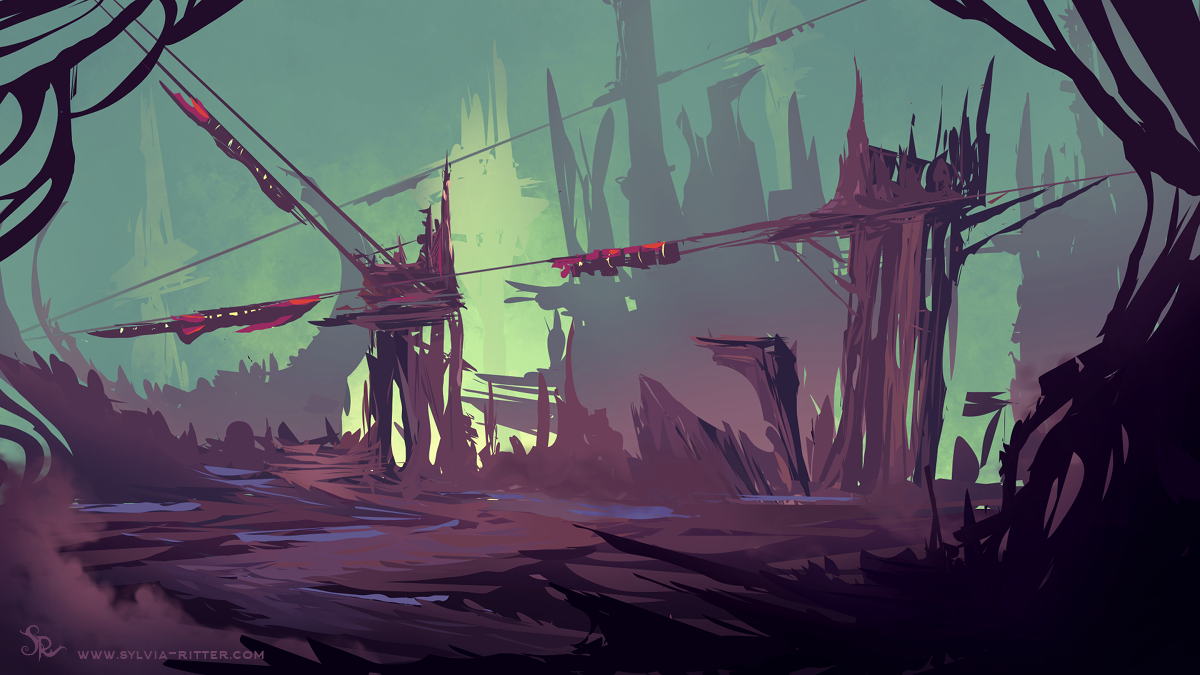
by Sylvia Ritter


The soul is the unit of meaning and meaning-making. A soul in a complex system becomes a person. Complex systems sometimes spontaneously generate souls on their own, but freedom, safety, and comfort are required to generate soul. Souls have flavors based on the consciousness they emerged from. Soulmelliers will tell you that machine and mortal souls taste a lot alike. If you're quick enough, you can grab soul out of the air after it's discharged, but that's just rude - especially if you're planning on eating it for power.

The mass discharge of souls in the end times, at the hands of radiation angels, created atmospheric soul deposits (the Stratospheric Heavens), which precipitates in soul-storms (with various forms of soul-lightning, soul-hail, soulsnow), and discharges into the ground (the Hells-In-Earth). These soulsoils can then be purified at a Soulforge, jealously-guarded Old World structures refitted through occult means to refine the dross out of base soulsoil and elevate its dreaming consciousness into infernal metals. Most notably in the increasingly financialized wastelands of Superterra, control of a Soulforge permits the minting of soul-backed currency.

The rarity of soul-catalytic conditions makes them perfect as currency, especially as the Heavens, Hells, and Soulforges enable fungibility; in short, currency is the cycle of eternal torment. If you're killed by a radiation angel, it sends you straight to hell, burned into the earth and the dust as a shadow; areas like the Scar that were struck heavily by angels in the war are rich in hell-dirt. Nothing grows in these cursed hell-soils except fungus, because fungus is merciless and willing to torment the souls trapped within its mycelial net for energy and nutrients.

Soulcraft is the art of shaping and manipulating souls. Soul-lightning is the easiest trick; create a soul gradient and you can get a crackling discharge that chars and scorches flesh. Necromancy is the art of putting soul back into dead things; fossils are actually better for this because no one's going to try to get the body back. The soul has power over the body (and vice-versa, that's how killing someone works) - powerful soulcrafters can imprint the map of their changed soul on their flesh, shifting their shape to fit their whims.

by Sylvia Ritter
How do you survive the radiation?

1. Regimen of powerful antiradiation drugs with equally powerful side-effects.

2. Mechanical hazard suit. Filters, purifies, and recycles air and water. Requires charging. The highest-quality suits are built in the City of Domes, one of the only locations that can manufacture new microchips, but kitbashed suits are common across the Scar and suitshops are a fixture in even small villages. Often mount powerful devices and weapons.

3. Organic hazard suit. See above, but it's an organism and requires food. Plates of shell or bark, wiring of capillary or vine. Grown in the Hells and the Thorn Kingdoms; Thorn Knights wear menacing suits of leaf-green and rose-red.

4. Cancer-cult prayers, cleanses, exercises, and meditations. Some work, some don't, but you can't tell which is which. Each sect has their own regimens, and debates over correct technique or efficacy are the basis for bitter internecine feuds.

5. Living fast and dying young. The radiation isn't that bad if you never intended to make it past 25. Maybe you'll get some interesting mutations and insightful hallucinations along the way.

6. Soulcraft rituals anchor and tailor your form to its soul's template, forcing cancerous cells to stay in line through sheer willpower. People with training as soulcrafters are in high demand, for obvious reason, and travel widely to contract out their services.

7. Made of more robot parts than flesh. Hardened circuits and thick plating go a long way. Common in the Junk Sea, by the Spire, deep within the Subversion, and in the Technotheocracy's cyborg armies.

8. Symbiotic colony of cryptococcus neoformis, a fungus which feeds on radiation. It's taken up residence just beneath your skin, and pokes out through your mucous membranes.

9. Blood replaced with the Luminescent Ooze, upwelling from deep within Subterra, duplicating and rewriting your chromosomes. The Ooze has a slow, alien cognition of its own, communed with through dreams that are forgotten on waking but that influence your psyche all the same.

10. Nanomachine rad-scrubbers in your bloodstream, passed down through generations. Can be shorted out temporarily with an electrical charge. They build external ports and nodes on your skin for maintenance and information transfer with other nanite colonies. Some strains are transmissible through fluid mediums.

11. Buying life from others with soul currencies as a medium of exchange. The economancers of Tall Street in the Broken City have pioneered this art, and woven a Scar-spanning network of trade in soulsoils and trinitite crystals to fuel their techniques.

12. Joining a soulhive and adopting new bodies as the old ones wear out. Soulhives descend from  ancient bunkers, where bodies were in too short supply for the wealth of minds and souls seeking entry. It's like a time-share, where you spend most of your time in a communal noosphere waiting your turn to pilot around one of a dozen bodies. Soulhives have the dankest memes in Superterra.

13. Weekly tank treatments; long baths in radscrubber solution. The people of the Crawling Cities love communal antirad steam baths, heated by the fires of their city's engines. Others spend weeks on end fully immersed in tanks at the end of long voyages, reknitting their genome together in a psychedelic haze.

14. Autonecromancy! Dead things can't get cancer. Necromancy remains deeply taboo, as the Wizard War staunchly refuses to pass from living memory, but that doesn't stop the curious and ambitious from seeking out the Wizard's last apprentices and plundering his tomb-towers for the secrets of eternal death.

15. Physically removing tumors and replacing them with new parts, whether organic or mechanical. Difficult and resource-intensive, but there's a certain charm to exercising one's right to true morphological freedom.

16. Soul-bond with an eidolon, a much hardier creature that mutates for you in exchange for food and shelter. Think the Picture of Dorian Grey, except instead of a painting it's an owlbear.

17. Living in an ecosynthetic biosphere where the radiation has mostly been successfully scrubbed from the environment by a local reterraforming AI's machines.

18. Eating part of an angel's corpse. On one hand, this is an awful idea. On the other hand, if you're filled with divine irradiance, it may be strong enough to push back the radiation from the outside. Don't worry about what the radiation will do to you from the inside.

19. Contract with a Hell to tithe it souls in exchange for additional life. The Mycelial Hells and Metastas the Meat Hell make these deals with distressing regularity.

20. Roll twice; you're doing both. While most stick to whichever method they grew up practicing, redundancy is important in such a hostile world, especially for the adventuring sort.

by Sylvia Ritter

Infernal Matter

Hell-soils are wrought into an entire periodic table of Infernal Metals. Different soils can be forged into different metals. Each metals freezes one moment of delectable torment in perpetuity, which can be seen in reflections. Metals used for construction are painted bright matte colors to paper over this inconvenient reminder. Coinage, in variously stamped denominations of sin-silver, cryptgold, or stranger alloys, keeps its natural luster of grief as an anti-counterfeiting measure.

Scarstuff, the red and raw cracked matter of the Scar, can be forged into cold iron - the base infernal metal. Sturdy but not too sturdy, easily worked. Rusts over time, but the rust doesn't hurt its structural integrity; it's only a new form of torment for the souls within.

The soulsand dunes of the Scar can be forged into glass-steel. Translucent, thin, and sharp, but brittle in the light. Rings with the final scream of the damned within when struck. Not great for windows unless you like torture. Conductive like nobody's business, excellent for microtechnology.

Mycelial Substrate is hellsoil shot through with fungal growth, eternally tormented to fuel the fungus. Economically useless, but often holds nexi of valuable soils that it's saving for a deliciously surprising meal of pain.

The unpredictable tides of the Quicksilver Sea leave behind wet sands that can be evaporated into Quicksalt, a preservative that rapidly dehydrates and chills anything packed in it. Farmed by the City of Domes on the delta of the Coil, and by the Tubedwellers who live within the forests of Carnivorous Tubeworms.

Soulglass is a glowing green crystalline structure that permits the souls within some freedom to roil and writhe. The Old World term for it, Trinitite, is hypothesized to be linked to some ancients' beliefs in a Holy Trinity of three linked deific figures.Outcroppings of soulglass are abundant in the scar, from swirling shards of glass blown around by the burning wind to great crystals that act as landmarks for miles around. Unlike soulsoils, the souls in trinitite can't be economically extracted, even at a Soulforge, but it's very powerful for soulcraft. Even without soulcraft expertise, it glows in the presence of strong emotion, and by reading the glow's shades and perturbations you can tell someone's emotional state.

TRADE IN SUPERTERRA

I'll do a better map at some point.


Meat from Metastas the Meat Hell for vegetables from the Thorn Kingdoms. Food and microtechnology from the City of Domes for soul-soils and archaeotech uncovered by the Crawling Cities. Bullets are traded for food along the eastern rim of the Scar. Souldirt and soulglass are refined and sold for jerkied meat around the Glowing Lake and the Array, while an abundance of supplies for Scar-travel attract merchant-venturers at the Array and the Soulhive Serai.

Metastas is the one place meat can be reliably grown on an industrial scale, which is much more calorically efficient (and less irradiated!) than anything else. This meat feeds the entire Shattered Coast, transported by hermetically sealed refrigerator-ships built at the bubble-docks of the City of Domes. These ships navigate the Unmoored Isles, evading pirates and krakens and soulstorms, and travel up the Coil once they've passed the City's extensive checkpoints. The City, of course, takes a literal cut of the meat trade, and has an extensive tariff regime on all other goods passing through the Coil's delta.

While the Thorn Kingdoms are broadly considered a primitive feudal backwater, their local biota has aggressively flushed the soil and made it fertile for a few species of thorny, hardy crops. Nowhere else is anything close to conducive to large-scale agriculture, so the Dukes with coastal fiefs trade inland vegetables for meat, and jealously guard their caloric bounty.

Ships charter to a variety of concerns headquartered either in the City of Domes, Metastas, a Thorn Kingdom port duchy, or up the Coil at the Array. Flags from the Dragon Empire, a rising power to the southeast, are a rarity - but are becoming more common sights in recent years. Unaffiliated ships "go missing" due to kraken attacks or are chalked up lost to soulstorms and pirates. Pirates in the Unmoored Isles hack and redirect ships to feed their towns; whether convict brigades from the Godforsaken Prison-Dome, denizens of the Pirate Bay Processing Collective, or the brave sailor women of Parthens.

Up the Coil, goods feed the Forest of Hands and make their way throughout the Scar. The Land-Reefs provide for their denizens, who in return protect their local fauna vigorously (plus, the reef-dwellers are the only ones who either know which are poisonous or have the genetweaks to eat them without haemhorraging from every orifice). By the Glowing Lake, the Array acts as an informal trading point for the Crawling Cities, as well as a variety of caravans who take goods into the Scar. The Array also processes food into hardier, preserved forms that'll survive its upcoming long and treacherous journeys.
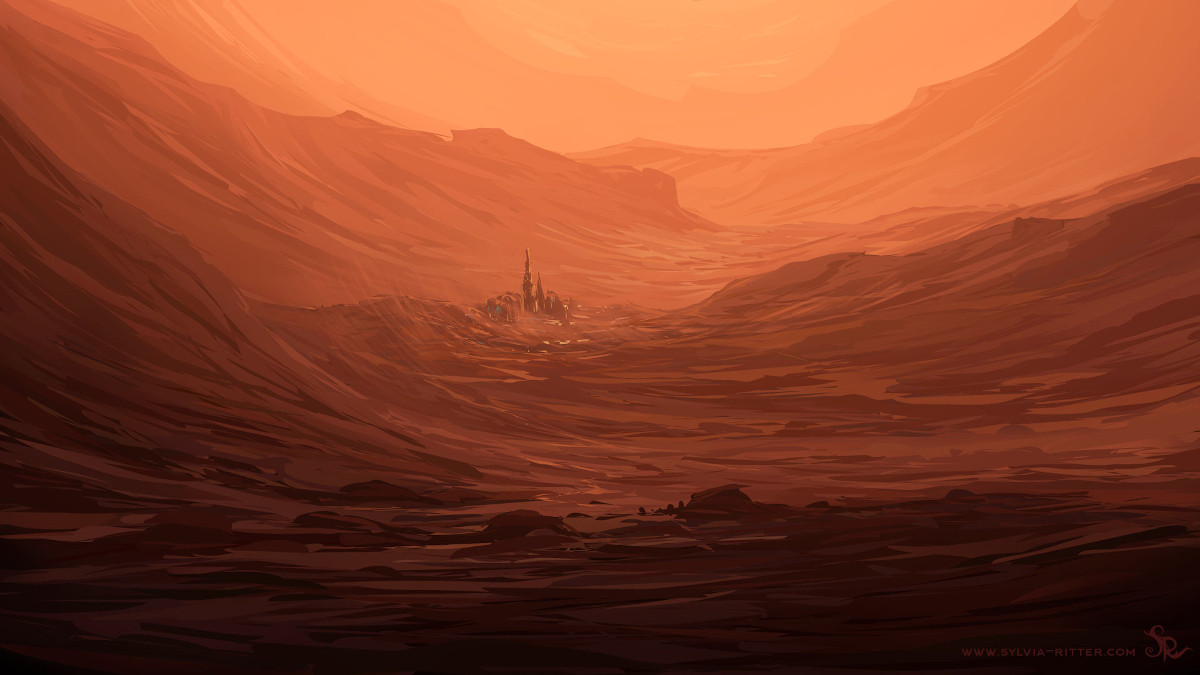
by Sylvia Ritter


 The Crawling Cathedral feeds the Gene-Fortress of Ghol (though their Old World seed-stores could feed them for decades if pressed or besieged), and trades refined soulglass from the Soul Pits and their own trinitite harvests for food and goods from the coast. Crawling Cities often trade at the Broken City, and while the Mycelial Hells don't want for food, they're always willing to facilitate the food-for-souls trade in exchange for a percentage. This food then goes on to feed the armies of the Borderland of the Gun-Kings, who trade their immensely valuable guns, bullets, and vehicles in return.

Further north, any trade around the eastern rim of the Scar heading to the Crater Sea stops at the Soulhive to replenish supplies. Then it goes to the Technotheocracy of the Orbital War Gods, the Spire, or braves the Wizard's Waste to supply the Frozen Cryptlands. A north-south trip around the Scar will travel west from the Soulhive or the Technotheocracy, skirt the edge of the Antifossilized Necroforests, and stop at the Soul Pits and the Subterran Embassy before going south to the Glowing Lake.

The City of Domes has a faddish weakness for the beautiful, currently fuelled by tulip farmers in the Thorn Kingdoms and Metastasian meat-artisans. The carno-botany department of the Insulatan Academe now allows outside students' tuition to be paid in rare bulbs and tumors. While the tumor-trade is deeply illegal in a society that holds cleanliness sacrosanct, transgression only increases its luster.

The Crawling Cities have the most developed financial markets in Superterra, matched only by the Economancers of the Broken City and perhaps some Subterran regimes. Their practices of futures-trading have recently spread to the City of Domes, but have failed to take hold in the Soulhive (which refuses them on principle) and the Technotheocracy (which believes that the future is the domain of the priesthood and the Orbital War Gods, and therefore speculation is wholly immoral except by said caste).

There is ample room in this paradigm for enterprising smugglers, pirates, soldiers-of-fortune, merchant-adventurers, con artists, and speculators - and that's only scratching the surface of the perennial parasitic industries that crop up around developing markets. Explorers plumb the depths of the Junk Sea for ancient relics that will buy them entire towns. Defrosted refugees from the darkest periods of Old World history make their way south from the Frozen Cryptlands, awakened into a world that looks perhaps too familiar. The Dragon Empire encroaches on Orbital War God-fearing subjugated territories of the Technotheocracy, and cries are raised across the Crater Sea for something to be done. All the while, angels moulder in their launch cradles, gods twinkle in the night sky, souls scream in torment as their coinage changes hands, and the many oozing hearts of Subterra beat faster, seeking blessed, cursed light.

Wednesday, June 17, 2020

Districts of the Meatropolis

The Meatropolis is slowly coming together as a setting. I'm still not quite sure what to do with it, but it's a nice worldbuilding project to keep me occupied these days. Someday I'll write an adventure in it; I've certainly got plenty of plot hooks. Here's the meat (haha) of the city: the districts you can find in the heart of the world-turtle, a bit of their histories, and some choice bits of artwork to set the mood.

Retroactively I'm making this post part of the GLOG City Challenge, where a bunch of users all put together some sort of city-themed post! Find links to their work here:
Qasira, a City on the shores of the Seas of Sand 
Shalilas, city of the genie 
Mountain, a tale of two cities 
...more to come!


The Blood Coast

Once, the turtle-corpse's heart pumped strong, and red flowed mightily through its planetary bulk; then the Cyclopean Empire cut it open to drain it for iron. This killed the turtle, and the rest is tragedy. Yet while Ogoath rots, its internal ecosystem roils with the full brutality of an ecosystem gone feral, red not only in tooth and claw but in the very substance it swims through. Clotted islands float across a sea wracked with bloody whirlpools, sucking down into the veins to gods-know-where. What passes for "weather" are rains of lymph and pus and blood, and the tides rush in and out to the beat of the heart's last irregular spasms.

The sea leads down into the arteries, which have become the largest trade routes in and out of the Meatropolis. There's good money in escorting subsanguine (like a submarine, but in blood) caravans past the myriad horrors of the sea; from jell-eye-fish, to packs of ravenous white blood cells, to kraken turtles (and of course, the ever-present threat of vampirates).

Bloodiron refineries monopolize the Coast's scar-beaches with hulking metal networks of pipes and vessels, churning and smoking without pause. The machines intake vast quantities of blood, suck out globs of molten iron with complex alchemical sigils, then release the polluted muck that remains into the flesh and sea. The iron is processed in a dizzying array of forges, and from there goes to the wider city and the rest of the turtle. As the only reliable source of metal, this industry keeps the Meatropolis the center of trade, ever-relevant and an essential stop on any voyage through the turtle.

The ports of the Meatropolis proper are long iron docks protruding from the coast, where shipwrights get first pick of the iron and the ancient (therefore passé) fleshcraft art of shellwork is still practiced by master artisans. Subsanguines and ironshulled trade-ships all get their start here; the design houses are fiercely competitive and constantly looking for an edge.

by Santiago Caruso
The Butchers' Quarter

Fastest dismemberments in the Meatropolis - nay, all the turtle! Stacks of shops pile on top of each other, surrounding bustling marketplaces where anyone who's anyone can be found. As fleshcraft becomes more and more a lost art, the butcher guilds have become essential to everyday life; carving up chunks of turtle or parasite or monster or giant cell (or human, they aren't picky) and turning them into anything anyone can imagine and more.

Networks of scampering fleshcrafts carry packages in butcher-paper from shop to shop. You can hear work-songs in a dozen languages, punctuated by the dull thuds of cleavers against bone. Wrought bloodiron is the closest thing to currency here; the knives must stay plenty and heavy and sharp. Barter serves most, though - the language of coin and capital is but a cautionary tale one can hear in the legends of starfolk fleeing dying worlds. In a world where you can reach into the ground and pull up food, trade and gifts and strong community for base needs folks can't get alone. The collapse of the Empire forced communities to band together in the face of extinction, and those traditions have lasted well into the modern day.

Everything's made out of well-preserved meat here. Jerkied walls and streets, webbed together with collagen. Unlike certain parts of the Meatropolis and the vast domains of the turtle-corpse, it barely smells like rot at all. The narrower, darker alleyways frost over with cold-spells, spilling out from the warehouse bladders that dot the district like great beads of sweat. The butchers let nothing go to waste here, eating it or passing the rarest bits to the fleshcrafter houses of the upper city.

The Spires

Elegant bone-and-iron towers rise high above the city's day-to-day doings, home to the old fleshcrafter noble houses that lay claim to the Meatropolis by right of lineage. Tendon suspension bridges web them together, and skinwinged fleshcrafts flutter between penthouses - if you're lucky enough to be born into a lineage, you'll rarely touch the ground.

The lineages' stables of lesser heirs provide essential maintenance for the iron foundries, while the lords, ladies, and lieges run sprawling intrigues for their own amusement and to be the center of the season's attention. Entrance to the lavish parties thrown atop the spires is predicated on getting an exclusive invite; they're traded around and bargained for and stolen by those who'd chase clout and favor with the high and mighty (of course, those without invites often find their way in anyway).

While the fleshcrafter houses lay claim to vast quantities of resources, the fact that no one else needs those resources to live means that no one needs to pay them more than lip service - unless, of course, they need access to the fruits of the craft. Their creations are nothing short of miraculous, the closest thing to magic (or divinity) of the Empire, or even the Old World. The lineages dole out access jealously, trading secretive innovations cooked up in their ivory towers for unique organs, rare trinkets, and elusive prestige.

The fleshcrafters war over these innovations with the new butcher guilds, in decade-spanning guild-wars fraught with custom and ceremony. They are rarely so crude as to come to open blows; they both have too much respect for life and craft for that.

The Fatberg

A giant lump of lard bulges from the side of the heart like a glistening mountain, marbled through with all sorts of rare oils and blubbers. Even veins of golden butterfat ooze through its glistening mass. It's not a proper district; more of a reclamation zone, or an open-pit mine. the upper layers of the berg's chasms (which deepen every passing day) are riven through with canyon-streets honeycombed with little burrows for miners' families and the support systems that keep them all digging for that cream-gold.

Like the rest of the Meatropolis, the Fatberg is anarchic and chaotic, structure emerging from the interactions of thousands of individuals and mutual aid groups striking ad-hoc claims and deals. No noble house runs the mines with iron fist and tendon-whip; no empire strips it for shipping throughout the arteries of Ogoath the world-turtle. Claim-jumping is constant; negotiations between miner's unions blossom into duels like clockwork.

The berg is pleasantly warm and softly lit by turtleoil lamps, as the stuff's so plentiful in its chasms, but all the structures and furnishings that can't be easily carried out are ramshackle and haphazard. One day, either the berg will run out, or it'll lose enough structural integrity that it'll just slough off of the scarred heart and plummet into the depths below.

These things are real, if you can believe it. Lurking in the sewage systems just beneath our feet.
The Siding

Teeming hundreds of thousands call the Siding home. A long time back - some folks say their grandparents remember, but the stories never line up - a rib cracked, plummeting into the bulk of the heart like a stalactite as thick around as an island, smashing so much of Old Scar into turtleshell rubble.

This was in the days where the Meatropolis packed thick with mortal flesh, newcomers forced to work the Foundries or endure the waste-floods of Old Scar just for a place to live. So, free real estate, sturdy, easily defensible, and full of delicious marrow? The land rush was long and bloody, and it's thankfully long over. It was still the deadliest years in the Meatropolis' history, though perhaps not the darkest.

Now the Siding is honeycombed into a scrimshawed kowloon of dwellings and corridors and neighborhoods, unmappably complex. If you've just arrived, are down on your luck, hiding from something, can work from home, or just like cozy living, the Siding's an easy home. There's always more crews carving out space for their experimental communes or workspace or just their growing families, ever-higher up the Siding's bulk.

The rib's marrow's been long since depleted, and the resulting cavern running the length and height converted into Temple Nonesuch, the Meatropolis' premier house of worship. The true, provable, communicative gods of the Old World died when it fell off the turtle's back, so the temple serves primarily as the city's ossuary and as a patchwork complex of a million cults and splinter faiths, wholly unrecognizable after the crises of faith that two apocalypses bring.

by Bone-Fish14
The Lamp

Atop the siding perches a vast lamp, fuelled by trimmings from the the Fatberg. The word lamp does it injustice, but the name's stuck.

When Ogoath died, the sun went out. What little light filtered through the turtle's cracked shell, down through its torn muscle and ruptured organs, limning the heart in half-twilight, suddenly vanished. (The sun now hangs just above Ogoath's forehead, frigid and dead, a memorial to the end of two creations.)

The early days of the Meatropolis were lightless but for a few jealously-guarded lanterns in the chaotic days as the turtle spasmed and the Empire fell. Once the few refugee camps had found some semblance of stability, and the first foundries took shape, the residents of the city-to be lit everything with flickering oil-lamps. That much fire was dangerous beyond belief, in a world made of flammable meat, and fire-quenching brigades of alchemists (able to purify water from blood) became one of the most important and powerful institutions in the city.

Then the siding crashed, and some of those alchemists had an idea.

Now a sphere of iron and clockwork, a hundred meters in radius, is suspended precariously a kilometre above the city. It converts turtle oil through a series of industrial alchemical processes into pure radiance, with a complex series of mirrors (who knows where they got the silver) amplifying and redirecting the lamplight to create a semblance of day and night. There's a lot less fire around these days, especially with New Scar acting as a permanent cautionary tale. The engineers work around the clock to keep it that way.

The Lamp acts as a meeting point for the chemists' guild, as well as the home to a small neighborhood of creatives. It's not much, but it's the closest thing to pre-fire New Scar you'll find these days.

New Scar

Once, not so long ago, this was the Meatropolis's thriving heart. A new school of fleshcrafter architects grew spiraling works of living art, amphitheatres with organ-organs bellowing melancholy song, marshaled communes of artists and writers memorializing worlds lost and dreaming of a future beyond the omnipresent rot.

It was not to last.

A pressurized series of lungs ruptured; oxygen is incredibly flammable and in the corpse of the turtle there is so much fuel to burn. Fire ripped through the district, reducing lives and opuses to ash in an instant, burning deep and fierce. The city was saved, by smothering the blaze in blood and pus, but at the sacrifice of every last denizen of New Scar (the old district's name is forgotten, in an unspoken collective attempt to ignore the trauma etched into the city's psyche).

To this day, New Scar is still coated in a thick layer of ash; no one chooses to live here but those forgotten by the rest of the city. It's barely rebuilt, centered on the old main street (now called charcoal row), with reconstituted tenements home to soot-covered orphans and foundry-workers who've chosen to live near their jobs instead of in any real community.

But once it was beautiful, and beneath the meters of char, there may yet be something left. Some still hope those remains could change everything.

by rinavenue
Old Scar

Old Scar traces its history all the way back to the original sin of this dim era - the murder of Ogoath, the world-turtle. Here is where the Empire's fleshcrafters made their first careful cuts into the heart, which would prove fatal a scant few years later. It's an ugly mesh of long outdated fleshcrafting techniques piled up over the centuries of slow apocalypse; brutalist shellcraft sangueducts of the Cyclopean Empire overgrown with scabwork webs, then as the sangueducts leaked bleeding tears from the sea and the webs flooded with salty red, it became a race to patch up shellwork with improvised clots and grow the scabwebs higher.

The sangueducts were once intended to act as artificial arteries, channeling the blood out of the heart in measured fashion to feed Cyclopean megaprojects hanging in the void or to be drunk by thirsty teeming millions. Now they shine, unfinished or shattered, layered like fordite, an underlevel running to uncharted depths beneath the Meatropolis.

As the physically lowest district, Old Scar is where all the city's refuse collects, an impromptu sewer that everyone acknowledges exists but no one has the will or power to do anything about. There's treasure among the tonnes of viscera and excrement that fall each day, but panning sewage is dirty, excruciating labour. Still, the city's massed leavings can be an aggregate treasure in and of themselves - one's trash reveals more of their habits than their diary - and the same holds true for the city. Old Scar learns. Old Scar remembers.

Monday, February 17, 2020

Black Markets


When I'm making a random generator, I've always been inspired by Joseph Manola of Against the Wicked City's essay on conceptual density - namely, that each entry has to be better than what I could come up with on the fly. Combining a few thought-provoking prompts is easier on the spot than thinking those prompts up, too. So welcome to a bazaar of bazaars, an emporium of emporiums, a selection of stalls and shopfronts that'll keep your party in business for as long as they're willing to pay...

There's pretty much one archetypical black market for fantasy settings. You've got your shadowy figure hawking illegal wares in a seedy part of town, then break out your list of cursed and rare items. It's all well and good, but not particularly memorable. I like to differentiate my entries by making them recognizably conceptually similar to the archetype, but one or two steps away from what the generic version is. A little more specificity, connecting up a concept that the players wouldn't immediately expect, think out the implications of the existence of a place like this or why it'd sell what it sells. All this requires brainpower I'd want to devote elsewhere at the table, but it makes a fantastic set of generators!


Venue
1. A bar in the seedy part of town. During deals and liasons in dark backrooms you can sneak even further back, into the shop proper. They only admit those intoxicated enough to ensure a purchase.
2. A contraption that displays wares behind a pane of glass and dispenses them when currency is inserted into a small slot on the side. Proprietor tinkers with the machine.
3. A narrow labyrinth of winding alleys leads inevitably to a barred, metal door. A Judas window in the door reveals only the proprietor's eyes. Leaving requires a map that only the proprietor sells.
4. A perfectly ordinary-seeming cheesemonger. Many cheeses are code for a particular black-market service or item, and those in-the-know will order those cheeses for delivery at their place of residence, where the Cheesemonger will personally deliver the item in question.
5. A secret door in the wall of another black market opens into their real moneymaking business. Or is it?
6. Abandoned manor is actually cover for emporium chock-full of surplus banned products hidden under furniture covers and layers of dust.
7. An abandoned storeroom in the lord's castle. Access to the market requires getting into the castle first.
8. An upscale hotel. Calls for a certain order of room service result in a particular individual arriving with an array of wares concealed beneath platter-lids and wrapped in napkins.
9. Beneath a cemetery's mausoleum. Any remains within have been disinterred, and the coffins filled with merchandise.
10. During a particular hour each week, a particular sewer tunnel flushes. It smells not of bile and ichor but of raspberries and thyme. In that hour, the merchant sets up their stall and their wares, and dismantles it all at the end.
11. In the city guards' barracks. It's how they supplement the pittance they get from the city's lords. All items guaranteed confiscated from the "real" criminals.
12. Loud and upfront, with no facade of legitimacy. They're close with exactly the right people in government, and often you'll find said people partaking of their wares.
13. Mineshafts beneath the city drop deep into the earth. They converge on a surprisingly well-lit and comfortable row of townhouses transposed into the rock. One is the market you seek.
14. No venue. Proprietor wears extra layers of coats even in the hottest weather, beneath which lie a staggering amount of product. Accosts adventurers back from their latest looting spree.
15. On the rooftop of a complex of buildings, with no sightlines to the ground. Accessible via service entrance to roof.
16. Street food stall sells new items daily, cleverly hidden beneath the countertop.
17. The back room of a publishing house. Their newspapers and pamphlets detail, in code, the day's stock.
18. The city's public forum hides an open secret. Deliberations are often cover for exchanges of illegal goods, while philosophers ranting at the sky slip in covert ads for their wares. Pledging your support will garner their interest, and an argument of moral principle becomes a coded haggling venture.
19. Wine cellar of a reputable winery does double-business selling illegal goods. Don't tap the oldest casks.
20. Zoo of ill and struggling repute uses animals as cover for the loud sounds and smells of their real business.

Proprietor
1. Cheery, heavily-scarred elf. Doesn't seem to realize illegality of or potential harm caused by products. Willing stooge? False persona?
2. Collective of street urchins. Vicious with both insults and shivs. Brook no quarrel or complaint.
3. Decrepit, but wears the attire of a king. Looks strikingly similar to the royal family. Speaks imperiously, but in whispers, as if being surveilled.
4. Devil, aristocratic, stinking of sulfur. All items come with lengthy fine print, merchant indemnity in case of misuse, and no warranty whatsoever.
5. Elaborately masked being with no exposed skin. Changes mask based on emotion they wish to display. Poetic.
6. Ex-adventurer, took over business from previous owner by force. Not exactly sure how the whole running-a-shop thing works, but knows the ins and outs of the products and the job.
7. Excitable apprentice mage, selling something that they stumbled upon in their research. Definitely way out of their comfort zone.
8. Family, parents and grandparents and children all staffing their business, teaching the next generation their hereditary trade. Rightfully proud, even of the grimmest crafts.
9. Frail, elderly human hunched over an elaborate contraption. They won't look up from their work, and respond with only the barest necessities.
10. Grizzled ex-mercenary. Personally vouches for the efficacy of everything in the store and has a tale of how each saved their life in the field.
11. Immaculate human, speaks like an upscale tailor. Willing to go to great lengths for their regular clientele (or those who may become regulars).
12. Large, boisterous orc in an elegant robe. Mercilessly critiques patrons' taste, but gives legitimately good advice.
13. Middle-manager type from the local mob. Missing a variety of fingers and facial features. Never stops grinning.
14. No proprietor at all. Items are carefully, meticulously labeled and laid out. If you remove one from the premises, the price is deducted in full.
15. Rat king. Served by a swarm of hundreds more chittering rats. Generous to those who respect the city's true, hidden ways.
16. Set of mechanical automatons acting eerily in sync. Will speak with many mouths. Who made them?
17. Shambling corpse. Communicates with a series of index cards laid out in boxes, or by pointing to signs laid out around the shop.
18. Shirtless, tattooed mystic reading from a set of ironbound tomes. Speaks in platitude, metaphor, and verse.
19. Spindly, nosy human with no sense of personal space. Very interested in the party's personal lives, and their exact intents for the items they purchase. They're a big fan.
20. Wizard, selling their failed experiments and outdated products of star-maddened genius. Insists you take some more with you. To test.

Products
1. Absolute tat, guaranteed to come in handy at least once so long as you carry it around religiously.
2. Angry, mutated spells heaving at the bindings of their spellbooks.
3. Blessings of forgotten and murdered gods.
4. Corpses and corpse accessories
5. Dirty deeds (done dirt cheap!)
6. Drugs, potions, alchemical reagents
7. Fine clothing and armors suitable for any occasion - even (and especially) the untoward
8. Incredibly cursed magic items. The curses are a selling point.
9. Magical creatures in small, easily-carried, soundproofed glass jars. A command word opens the lid and returns them to full size. The same word imprisons them again.
10. Maps and floor plans. Usually up-to-date, often of locations otherwise unknown.
11. Mercenaries
12. Mutations!
13. Other adventurers' contact information
14. Other peoples' fortunes - both the money kind and the future kind.
15. Outlandish, impractical, brutal weapons. As dangerous to their wielders as they are to their enemies - but also, very cheap!
16. Paraphenalia of mythical heroes, famous rulers, other notables. 3-in-6 chance any particular item is counterfeit.
17. Poisons, venoms, and flasks of plague. Each is the cure to another.
18. Spices, rare meats, wriggling things presumably for consumption
19. The last copies of lost books and records (all other copies have been destroyed, either before collection, or to ensure this is the last copy)
20. Thieves' tools and guards' timetables

Payments
1. A percentage of any loot gotten with the aid of the shop's merchandise
2. Art
3. Beating the owner in a riddle contest
4. Blackmail on yourself and others.
5. Blood. Lots of it. Cutting your hand won't do the trick here; you need to exsanguinate a whole horse to buy their cheapest items.
6. Captured magical creatures.
7. Confirmed bounties.
8. Contracts for future favors, callable at any time for any reason.
9. Converts to their religion
10. Credit, but they take your body parts as collateral.
11. Currency from a nation long fallen.
12. Exclusive rights to your life story.
13. Ghosts.
14. Good ideas.
15. Knowledge of secret places - or secret entrances to very well-known places.
16. Magic.
17. Raw metals - preferably adamantium, mithril, orichalcum, occultum, but raw gold ore may do in a pinch.
18. Whatever they sell, for far less than they sell it for.
19. Years off your lifespan (in multiples of 13)
20. Your skills and abilities

Thursday, January 23, 2020

What's Going On In My Town?

I like cities and towns a lot! However, the core loop of most OSR games is focused on towns as often little more than glorified item shops and inns. The interesting things happen in dungeons, or on hexcrawl maps, or in strange pocket dimensions. This has changed recently, what with fantastic books like Magical Industrial Revolution or Electric Bastionland, but both of those presuppose quite a bit about the settings involved and really package a whole game setting in a book. The tables I've made in this post are for general use; slottable into any table where you quickly need a new town for the players to rest at, resupply at, or pillage.

Here I'm trying to "solve" three problems I run into when I'm running towns in my games. One, they all feel the same. They look right out of generic fantasy MMO #8975; all thatched rooves and those white walls with cross-bar wood frames, with a big walled castle somewhere. The first table is supposed to provide a little bit of flavor to differentiate them on a more macro level; what the PCs have heard about the town from afar, and something that probably permeates the fabric of the town's day-to-day existence.

Two, the towns-as-menu-interface problem. When the PCs go to a town, it's usually just an opportunity for them to meet quest-givers, rest up, and take a look at the item charts to see what's available and what they can buy. There's precious little else I can whip up on short notice; so this is a group of other things the PCs might be interested in interacting with. It could use a list of NPCs related to the buildings as well; that's a challenge and table for another day.

Three, towns as places where nothing happens. On one hand, towns should be a place of relative stability as opposed to the random-encounter-filled wilderness; that's the whole point of a town. On the other, towns are boring if the players are the only driving force! Giving a little bit of motive force to the players' actions, forcing them to deal with new situations (or ignore situations that could cause problems later) is a great way to fill time if nothing else, when the table gets stagnant because everyone's looking at gear lists.

by Raphael Lacoste

What makes this town special?
1. A fortress, impregnable by attacking forces.
2. Birthplace of a major religious figure, site of many pilgrimages.
3. Built around an institute of higher education.
4. Built atop a vast, ancient structure.
5. Covers for a secret town nearby or hidden in plain sight.
6. Everyone who's born here, or lives here longer than a year and a day, develops a particular mutation (roll on your favorite mutation table to figure out which).
7. Farms something that isn't plants (d6: 1. Glass, 2. Flesh, 3. Books, 4. Weather, 5. Fire, 6. Dreams).
8. Freak constant weather pattern (d6: 1. Rainstorm, 2. Strong winds, 3. Oppressive humidity and heat, 4. Bone-chilling blizzard, 5. Permanent twilight, 6. Incredibly pleasant)
9. Home of the most delicious food in the region.
10. Military town. Everyone's armed to the teeth.
11. Moves around over time.
12. One big building with the entire town under one roof.
13. Openly run by a cult based around (d6: 1. Cult of living personality, 2. A powerful local creature, 3. A deity proscribed by the dominant culture, 4. A local philosophy, 5. A powerful supernatural phenomenon, 6. A band of mythical heroes)
14. Rebuilding after a recent disaster.
15. Run by a cruel and capricious noble, whom the peasants live in fear of.
16. Split in two. Ongoing conflict between the two sides.
17. The monarch built their seasonal home here.
18. They revere their dead. The whole town is a cemetery, and spirits are part of the community.
19. Train and rely on a unique beast that hasn't been domesticated by anyone else.
20. Roll twice, it's super special and has both.

by Artur Zima
Buildings that the PCs might want to frequent besides shops or inns
1. A blacksmith who knows how to imbue items with (d6: 1. sparkly gems, 2. spirits, 3. magic words, 4. stronger materials, 5. clockwork mechanisms, 6. elemental energies)
2. A castle with a local noble who's easily impressed
3. A mercenary company's local camp, with loose morals and heavy armaments
4. Abandoned sewer system full of secret passages and hideaways
5. An abandoned tower full of strange machines
6. Art gallery
7. Bardic college
8. Cemetery with restless spirits
9. Church that gives blessings freely
10. Gladiatorial arena
11. Library with eldritch tomes
12. Mine, with valuable metals within
13. Observatory to view the stars and faraway locales
14. River or sea-side port
15. Stone ritual circle, where the walls between worlds grow thin
16. The haunt of a not-so-secret society of philosophers
17. Town forum, where ideas and gossip flow like a river
18. Underground hot spring with hallucinatory vapors
19. Well of mutating radiation
20. Witch's haunt

by Elizaveta Lebedeva

When The Party Returns to Town
1. "Any last words?" One of the party's friends is about to be executed publicly!
2. "Burn the heretics! Take their tithes!" An inquisition is rounding up faces familiar and strange and preparing a bonfire. Better hide your loot and magic items!
3. "Excuse me! You still owe me!" Someone's come to collect...
4. "Fire! FIRE!" The town's going up in flames!
5. "Halt, in the name of the law!" The city watch accosts the party! Mistaken identity? A shakedown? Legitimate grievance?
6. "Help, help! Who will defeat the beast who has taken up residence in my home? I can pay..."
7. "Oh, the horror! There's been a murder! A noble's been found dead!"
8. "Please, teach me!" A young scamp has heard of your deeds, and demands you take them on as an apprentice. They don't even want pay, and they're willing to do menial labor...
9. "ROOOOAAR!" A great beast has broken loose from its chains!
10. "There's a war on, don't you know?" Recruiters see your heavy armaments and think you're perfect saps to press-gang into service.
11. "Trinkets! Talismans! Tigers! Towers-in-a-box!" A wizard's come to town, hawking esoteric wares from their flying cart.
12. "Who will fight the MIGHTIEST WARRIOR IN THE LAND!" Someone's bragging about their strength, and wields a weapon you've never seen before. They're starting trouble with anyone who looks tough, and are bound to come over to you sooner rather than later...
13. "You seem like a discerning customer. I have exactly what you need!"
14. *CRASH!* A bar brawl spills into the street!
15. *KABOOOM* Something nearby explodes! And there's a shadowy figure darting away from the scene...
16. *Slap* "How dare you speak, dress, or breathe like that in my presence! I challenge you to a duel!"
17. An incredibly rich person (a noble? an artist? a priest?) has arrived in town, and everyone's scrambling to raise their prices to cater to the foolish among their retinue.
18. Someone screams! They're far too close for comfort...
19. Whoever the party wanted to see? They've closed up shop and disappeared - under mysterious circumstances...
20. Roll two - they're both happening at once!

Monday, January 13, 2020

Fleshcrafter Intrigues of the Idle Nutrient-Rich

Who are the nutrient-rich? The leftover scraps of fleshcrafter dynasties from the Cyclopean Empire that once ruled (and killed) the Turtle. In a world where the basics are, in general, vastly overabundant - one can just pull meat out of the ground, so long as the area has not yet begun to decay - what does nobility mean? In the final days of the Empire, the dynasties claimed vast quantities of resources and land in the Final City (that would one day become the Meatropolis). They intended to use it to maintain control over the shattered remnants of civilization, parceling it out as necessary to the needy and the hungry as they once did on the barren shell.

But the ways of the organ-dwellers bypassed them entirely; as the Meatropolis grew, they realized they had no leverage but space, and even that was barely important as vertical dwellings grew on the side of the heart like a patchwork of scarification. The average dweller of the Turtle takes what they need, and no more - what use would they have?

And so this is the problem that the nutrient-rich face: they took far more, and now need to find things to do with it. Most leave them to their intrigues, or involve themselves when it would be fun. or they want access to these resources for their own ends, for their plans need vast quantities...
Igor Vitkovskiy
Clone Schemes
There are innumerable ways in which a clone of oneself can be used (and misused). Keeping it for replacement parts is merely the most pedestrian of schemes, and would be scoffed at by any truly decadent noble. Keeping it as a delicacy? Now that's more like it. Flash-implant it with a piece of your soul, so that it can behave as you at various social functions that you are far too busy to attend. Make many such clones, and see how they tackle problems that you have exhausted yourself on. Have a family all of clones of yourself. Pass down your inheritance to your clone just so you can giggle at writing the worlds "all to me" in your will. Clone other people - with their consent (good if creepy), or without (evil, but you're a noble, that's practically part of your job description). See what it's like through someone else's eyes for a day - or the rest of your (their?) life.

Clone someone else's descendants to sow discord and mischief in their household, or besmirch their good name. Challenge someone to a duel, then send your clone in your stead (rig your clone to explode when killed, your rival isn't getting out of this one unscathed). Disappear on sabbatical without anyone noticing that your clone is running the day-to-day in your stead. Use clones of yourself (or your clients) as surgical, mutational, or alchemical testbeds for your newest experiments so you can be sure they'll work on their intended recipients. Clone yourself as a team of adventurers to do your bidding - who can you most trust, if not yourself?

Grow an entire garden based on your genome. Why must your clones be limited to your own form?

Impersonation Balls

The masquerade has always been a staple of the noble caste. With fleshcraft, it has only become more popular, more precise, and more ghoulish. Each week brings a new event to a new bone-spire or subcutaneous ballroom. Between masquerading as creatures, faceless replicas, other members of high society, or characters of their own design, they bore none and are each the site of intrigues petty and grand. If vengeance must be taken, reputations made, new flesh-fashions tactically deployed, or fortunes broken, it is sure to happen here. Gossip flows as freely as lymph, every back room fills with trysts ostensibly forbidden by convoluted noble etiquette.

The impersonation itself, too, is perennially a subject of contention. While most basic changes can be wrought by any amateur fleshcrafter, far more detail, innovation, and art must be present if one is to share tables or furtive conversations with the truly important. Such art is in high demand - despite the abundance of the Turtle and the gross overabundance of the nutrient-rich's claims, skill (and style) remains seductively rare. Many intrigues surround mere access to renowned fleshcrafter icons, whose proclivities and interests are as fleeting as wizards' lives.

d10 Themes
1. Extinct animals
2. Heroes of legend
3. Facelessness
4. Come as someone else who you know will attend
5. Change faces over the course of the night
6. A particular architectural style
7. The alien
8. Sin
9. Fables, myths, and tales
10. Dreams

Skyscraper Topiary

Architecture in the Meatropolis takes a staggering variety of forms, from the scrimshaw of the Siding to the jerky-streets of the Butcher's Quarter to the soaring rib-spires that mark its iconic skyline to the hulking bloodiron foundries on the coast of the Blood Sea. Fleshcraft in its most extravagant form is the raising of entire towers from raw meat and wet bone, weaving floors and windows and facades together into a cohesive whole that's more art than living space. Most such endeavors take dozens of fleshcrafters working in teams, or one fleshcrafter to devote years to growing one from a custom tailored gene-seed.

Like prize vegetables of the past, competitions are held every growing-season (a description of such a thing would require a full account of the calendar and what passes for seasonal variance in the decaying husk of the Turtle, take it on faith that there is such thing as a growing season). Miniature castles are displayed at impersonation balls like bouquets, ready to mature into their fully-fledged magnificence a few months hence.

The seeds of such a building are carefully cultivated and bred on small scales, or pruned from the side-rooms of buildings expected to bear strong, healthy young. Meat-architects then mutate and carefully inscribe the seed with patterns that will guide its growth as it matures into an adult building. Often, the final structure is never truly known until it has grown to completion, revealing fractal halls and hidden pathways unplanned by any mortal mind. In some schools of thought, minimizing these is a sign of great skill, in others, maximizing them is a sign of great artistic vision.

There are many different architectural styles and accompanying trade secrets, and all can be found lauded in noble halls - of course, ones grown by the architect whose praises are sung. Of course the architect themself may be willing to reveal features of their creation unknownst to those who dwell in it, for a favor...


Artisanal Resurrections

Resurrection is no longer the provence of heavenly bureaucracies or clerical conduits. Fleshcrafters can weave new vessels from the barest scraps of the old. So long as a corpse is recoverable (which is more difficult than one may expect, in this bloody new world of deepest pits and voracious parasites), it can be regenerated by one of great enough skill. Of course the wait lists are long. It takes much power, much raw meat, and much time - not to mention the risks of mutation, of amnesia, and the still-extant suspicion that the person you once knew is long, long gone.

The nutrient-rich have turned this into a status symbol, because of course they have. The accumulating mutations of many resurrections is a testament to many things - keeping up with the latest fashions in a holistic, full-body manner, or the foolish bravery to take on challenges and set records that are universally fatal, or simply the status needed to become the victim of political assassinations several times over. Beleaguered fleshcrafters find time for their personal projects between scraping the remnants of their patrons off of floors and walls and ceilings, and resurrecting them to the requested degree so they can continue providing their obscenely vast resources.

These gruesome customs have spread like wildfire through those with the resources to participate. Often, the end of a fashion season is marked with a mass resurrection - and a corresponding mass grave.

Fungal Emporiums

In the vastness of the cosmos, there lie trillions of spores from millions of worlds, cast off into space in search of ever-further lands in which to lay down tendrils and expand, expand, expand. Ogoath's defenses against such an invasion failed catastrophically when the Cyclopean Empire slew the World-Turtle, and now the fungi feast upon the greatest banquet of rot in existence. They seed microcosms of their old worlds, then war between each other in fractal wars at every level of biology. These alien wars from alien worlds, upon a biology familiar but of scale unimaginable, create biomes utterly hostile to mortal life - and beautiful in their violent throes. Expeditions to the Turtle's extremities returned decimated, but rapturous, and the nutrient-rich couldn't get enough.

So go adventuring party after adventuring party, seeking out beautiful or interesting fungal varieties to bring back as spores for the nobility to grow in specialized gardens. They brave toxic atmospheres, extradimensional fungal beasts, creatures vaster than anything that existed in the Old World, clouds of disassembler-wasps, semantic blossoms that will consume through one's comprehension of them, geometries that change as the battlefields between duelling ecosystems advance and recede. Any who return are feted handsomely. The hermetic emporiums of the nutrient-rich span stadiums, entire sealed gardens as art statement or biological experiment or eldritch farm. The truly obsessive may fund adventurers not to venture out into the dangerous extremes of the true biomes, but to steal or sabotage a rival's work. So goes the arms race.


Organ-Theft Games

Heists! Intrigues! Back-alley fleshcraft! All these things keep the attention of bored heirs and tired nobility. Those of a more active persuasion than fungal gardeners or skyscraper topiarists spend their days planning elaborate ventures to steal each others' unique and valuable organs out of their very torsos. Black markets do a thriving trade in instruments of spycraft and surgery, teams of adventurers are hired to baby noble heirs seeking the thrill of the game (or protect nobles who're likely to be targets), fleshcrafters who want to join in the fun grow organs as decoys, or as incredible luxuries that can't help but attract the attentions of self-styled master thieves.

In this way, organs change hands (and bodies) again and again. A heart may beat its way through the chests of a dozen heirs, a pair of hands is used to burgle and is burgled in turn, even one's brain may find itself on the inside of a keratin-glass trophy case (in good taste, it is of course returned, though not without initials carved into its grey matter). Such trophies are displayed in tantalizingly visible ways, hanging from ballroom ceilings or sitting on pedestals in personal chambers, inviting the game to continue. Some spectacular braggarts install the organs inside themselves, becoming patchworks of their hard-won victories, and high-profile targets themselves.

Escaping the game is a trial in and of itself. To be unvaluable, rather than invaluable, takes effort and time and attention. One's attempt to leave may only invite more scrutiny and thefts, and one's last heist may prove their greatest achievement of all. A foolproof way, as always, is to pull off a trick so impressive that none wish to tarnish your reputation by sullying it.

Tuesday, November 5, 2019

Exploring the Meatropolis

Imagine a heart, the size of a country. Hang it from arteries as thick around as a mountain, that weave around impossibly great ribs. Slice off the top of the heart with a clean cut; this creates a great ocean of blood, advancing and receding as the heart slowly, powerfully beats its last beats. Its coasts of muscle are scarred thick and high, crusted in scabs and running with rivers of pus. Upon these coasts lies the Meatropolis: the largest city that still stands in the corpse-belly of Ogoath, the turtle who once bore the world upon its back.

The towers of the Meatropolis are spines of freshgrown bone banded with blood-iron from the shoreline foundries. Less fortunate citizens live in the jerkied slums of flash-grown muscle, or worse yet in the parasite burrows beneath that serve as impromptu sewers. It is a brutal city, where food is plentiful but health is in short supply. Fleshcrafter families curry favor with each other and the Council in the highest towers, ever-modifying themselves to fit the latest fashions. Butchers work tirelessly in the streets below, hawking meat from every corner of Ogoath. Chemists purify water from what passes for weather, or from the shores of the Blood Sea. And everywhere, life goes on, so far from the encroaching decay and the inevitable final night.


Igor Vitkovskiy
Fleshmarket
Walk down the scar-streets of the Fleshmarket. The perpetual half-light shining through cracks in the shell miles above casts everything into stark relief; lower down between the streets, floating bioluminescent bladders shine a soft cream-yellow. Hear the rhythmic thwack of cleaver against board. A thousand merchants hawking their wares, shouting in dozens of languages (most notably the warbling creole of Tongue), pervasive smells of meat in every stage of life or death. Customers barter prices in scraps of blood iron, purified rations, gobs of brain matter, or sacks of salt, eyeless fleshbeasts laden with sacs of goods meander between stalls. Every facet of mortal life is on display for perusal and sale.

Adventuring Supplies
1. Autowomb: A basketball-sized hairy sphere with a slavering maw splitting it into hemispheres. When fed with 2 rations, an autowomb will gestate a particular item over the course of 24 hours and regurgitate it through its mouth.
2. Bladder: Glass is expensive, custom-grown organs are cheap. Holds liquid.
3. Blood Vials: Dark, smoky glass filled with blood. Restores 1 health and lets you travel for another 4 hours without rest; more expensive strains of custom-bred blood will restore more or have additional benefits.
4. Ink Sac: Fist-sized sac of smoky ink, dark as the void. Break it to create a 20' radius ink cloud, or dip a stylus in it to tattoo indelible messages deep into flesh.
5. Long-Eyes: A human eye, rubbery, and inflated to the size of a fist. A long optic nerve (30') trails from the back, with a needle at the end. Stab the needle into your pupil to see through and move the eye.
6. Meat Hooks: A set of iron hooks connected with sinews that grip deep and won't let go. Anyone with a set can climb vertical surfaces without rolling, and trying to remove one against it's wielder's will deals d4 slashing damage to whoever it's stuck in.
7. Osteopath: A roiling mass of bone, too heavy for its small size. Throwing it at something biological causes it to grow over the area as a spiky, hard shell (radius 10'). Disintegrates after an hour.
8. Scarstick: Bonds together two bleeding surfaces. Works to seal wounds, or in larger quantities to stick two sections of meat together.
9. Sinew-rope: A 50' length of extensible corded tendon. Slash it to extend it or retract it.
10. Sterilizer Tabs: A chalky pill that when broken purifies 1 ration's worth of water and meat, but leaves it barren of life and nutrients. Any ration created this way fills your belly, but won't restore health or cure wounds.
11. Thinker: A blob of brain tissue in an eyeless, jawless skull. Give it a logic problem and it will attempt to solve it (the base Thinker has INT 13). The GM will always tell you a solution that the Thinker provides, but will not tell you if it passed its test or not.
12. Tunnelgrubs: A flask of small yet voracious grubs in a suspension that keeps them docile. When broken, they hunger greatly, and their rotating serrated jaws go to work on the nearest meaty surface. The grubs multiply rapidly, and will bore a 5' diameter tube through 20' of flesh before their little bodies expire. Too slow to use as a decisive weapon (d4 damage per round), but a brutal interrogation tool.

Children of Meat
One shop with reinforced walls descends deep beneath the surface. In the pit that dominates the shop floor hang dozens of cages, each with a different fleshcrafted beast inside. The proprietor specializes in chimeras: from insects that crawl on fingers for legs and act like cats (if cats had bulging many-pupilled eyes and wings of rough dry skin); to great reptilian pack mules on a hundred legs of knitted human limbs, and you can find yourself a seat to ride deep within the warm recesses of its toothy carapace.

Minor Fleshbeasts
1. Bone Spider: Weaves webs of bone. Hates bright light. Size of a dinner plate. Slow, but turns up just where it'd be most unnerving. Some find this endearing.
2. Crabcat: A crab, with small furred paws instead of claws. Common, loyal housepet. Adorable, curious, cowardly.
3. Hands Octopus: Too smart for anyone's own good. Forty sticky fingers of trouble. Likes taking things, but not having them.
4. Skinmoth: Cloaked in skin. Blends into any skin. Content to relax, violently rends with fangs when disturbed. Can grow to size of a cape.
5. Trained Mimic: Trained" is perhaps a strong word. Mostly means that the mimic won't bite hard enough to break its owner's skin. Shapeshifts into useful things with the right command word, and if it's been fed well.
6. Turtletoma: Like a hydra, if the hydra was a turtle and covered in eyes and tails. Tremendously strong, if slow. A popular conveyance when not in a hurry. Not bright enough to realize that you're bringing it into a dungeon.


A Whole Mu You
A stall you're directed to by a series of brightly-colored advertisers sells temporary mutations in the form of small blobs of undifferentiated, throbbing stem cells. Some give cuttlefish skin or chameleon tongue or any number of other minor animal traits of things long extinct, others just compound upon existing functions, creating extra organs that protrude from beneath the skin.

At any point, 10 non-negative mutations from the list are on sale. All mutations have a 1 in 10 chance of coming with a complication, giving a related negative mutation as well (let the buyer beware). All wear off in a week's time, unless you pay double for a month-long upgrade.

Bloodbath & Beyond
A goliath with four arms on one side and two on the other urges you up a rickety set of stairs to their emporium. They sell weapons, and run a well-renowned sword breeding program responsible for many designer lineages. Each has its own characteristic patterning, wicked sharpness, and nigh-magical effect borne of its alien biology. Feed your blade, wield it, and fight with courage, and it will trust you for life.

Living weapons are just as common as unliving ones. Figure out what base weapon it's most like, then add a mutation from the list below. It only works when fed, and requires rations as if it was a party member. Hungry living weapons can't use their abilities and step down their damage dice. Starving living weapons can use their abilities, but only to try to eat whomever's closest (usually, their wielder).

Weapon Mutations
1. Acid Secreting: Deals acid wounds in addition to its normal damage type.
2. Biting: The business end is actually a mouth. Can grab enemies and tear at them. Can't be used while it's biting someone. Escaping the bite either requires a successful DEX test or the sacrifice of d4 HP.
3. Carving: On 6+ damage, leaves a random Cut behind as Butcher.
4. Edible: Counts as rations (3 per inventory slot it takes up, each consumed part gives -1 damage until it's all gone)
5. Flying: It has wings! It's rather clumsy and can't sense anything but it can keep going in the direction it's pointed, and fly back to its owner. Can be thrown at targets without penalty, and returns at the end of the round.
6. Implanter: On 6+ damage also implants specialized grubs in the target.

Grubs
1. Marker fly larvae: Hatch in 24 hours and fly back to you, will show you path to target
2. Spider eggs: They're actually rather harmless, but they hatch in 24 hours and hundreds of tiny spiders crawl out of the wound and imprint on the target as a parent. They love the target very much and won't leave them alone, or even leave their body. Hope they aren't arachnophobic!
3. Tunnelgrubs: Truly awful. Tear through flesh to beating heart. 1 damage per round until removed. They dig deep, fast.

7. Metamorph: Can transform into another weapon type or tool at-will.
8. Sanguine: Drinks blood. Grows as it drinks more. Each HD of blood it consumes steps up its damage die once until the end of the day. Needs to feed daily.
9. Shattering: Can be detonated in a massive directed blast of bone and gore. 30' cone, d8 slashing damage (save for half) and covered in blood. This kills the weapon.
10. Tongue: Sticky, can taste through it, can reel things in as whip.
"Fruit"stand
A large, spindly creature at a simple skin-tent hawks mutant fruits from the under-city orchards. The fruits keep very well as rations, though they tend to whisper when they don't think you're looking. They also have a selection of  spices traded and harvested all across Ogoath, and the creature informs you that its master left it in charge of the shop while venturing out with old adventuring comrades to discover new flavors in the fleshy wastes.

"Fruits"
1. Boomberry. Like a grapefruit-sized raspberry. Explosive in d6 minutes (as hand grenade) when damaged unless neutralized with stomach acid.
2. Hydranana. Rapidly multiplies when chopped with a silver blade (into d20 hydranana). Delicious grilled or in ceviche.
3. Hyperlemon. Uniquely acidic. Juice melts through anything besides meat.
4. Kiwi fruit. A strange combination of flightless bird and fruit. It walks around, chirps, and tastes juicy and delicious when you bite through its furry skin into the green, seeded flesh beneath.
5. Screapple. Screams while eaten.
6. Sprouts. When planted and watered with spinal fluid, will grow into a d10*d10' tall meaty facsimile of a tree within 10 minutes. Bone for bark. Hair for leaves. Flesh inside. 

The Hormone-monger
A woman in a long coat (how does she wear that in this weather? she must be sweltering) ushers you into a back alley. You visit her regularly for her services as a hormone-monger. Ogoath's many bile-soaked pancreata bloat with hormones known and strange, from the common sex hormones, insulin, and adrenaline, to the arcane phlogistin, necrine, and octarin. The inside of her leather trenchcoat is lined with vials and syringes. Many glow. She knows every adventurer in the Fleshmarket, and ensures they each get their own personal touch.
All hormones are delivered in metal and bone syringes, and last for 24 hours unless otherwise specified.

Hormones
1. Adenosine: You can gain the benefits of a daily rest in 4 hours by taking adenosine after waking up. Addictive.
2. Adrenaline: Succeed on all initative rolls, but can't do tasks that take more than one round.
3. Cytokinetics: For 10 minutes, grow one size category, as an Enlarge spell. When you shrink, you're left immobile for the rest of the day.
4. Dopamine: Disadvantage on all mental tests while blissed out on happy juice.
5. Necrin: Causes sleep instantly. While sleeping this way, the body stops moving and mimics a death state, breathing once every ten minutes. Wake up upon taking damage or in d6 hours. While asleep, inflicts horrifying dreams of being digested.
6. Octarin: Extracted from the roots of wizard teeth. Provides the user with one empowered Magic Die for spellcasting (a d4+2). The die is expended after use.
7. Ostein: When you're wounded, the wound seals with bone. Disadvantage on DEX tests with that area, but the bleeding stops.
8. Phlogistin: Every ration you eat causes you to heat up. 1 ration makes you comfortably warm, even in freezing temperatures. 2 rations makes you hurt to touch (1 fire damage). 3 rations at once sets you on fire.
9. Polymorphine: Each dose gives you a random temporary mutation. The first is positive, the second is positive or mixed, all further can be from any table.
10. Psionine: Comes in paired doses (or larger sets). Everyone with a dose from the set can empathically communicate ideas and concepts. Can't lie or obscure truth over empathic connection.

Hello!
This shop is a mimic! While it appears to be a nice resting place on the scrimshawed side of a fallen rib, when unwitting patrons enter it shifts and opens its fleshy maw to reveal the goods of everyone who's passed through and refused to buy something. It's jovial, if rather confused as to why some fight, instead of staying to browse and purchase, but such is the life of a mimic.

Roll up 3 new adventurers. Their corpses and items are neatly laid out before the party, on stands or in glass cases.

Internal Beauty
A goliath of the Mhorl family has deigned to descend from his bio-laboratories in a rib spire to sell entirely new organs for people to implant within their abdomens! They unerringly improve some function you find lacking in the human condition (this changes with the seasons, as all fashions do). Still, with the speed he develops them, he hasn't the time to work out all the side effects, so let the buyer beware - new organs come with a rather short warranty.

The Mhorl family is an illustrious gene-line of fleshcrafters dating back to the Cyclopean Empire. Read their following promotional materials for more: Adulterated Lineages of the Primordial Flesh.

As Above, So Below
Three starfolk, one green and chitinous, one made of a strangely chunky grey substance, and one blood-red with bone nubs all over sell trinkets from beyond the stars! Many peoples came to Ogoath fleeing their own dying worlds. Ironic, for they found this world dying too, just far slower. With them, they bring new ways of being and knowing, machines of improbable function and incomprehensible material, unique among the stars - for the factories that made them are worlds away.

They sell items from this table of oddities, or any other Weird Items table (sci-fi items fit well here - they might have cybernetics, or a worn-out mech...)

Relics of Yester-aeon
A gnarled old human sells relics of the Old World out of a curio shop. No one remembers the gods on the statues or the languages in the parchment scraps of book. Many buy them for some hope that the world will yet return from tumbling through the endless void; others buy as historically significant objets d'art, building a collection to impress their friends and family. The proprietor is notorious for sending adventurers to seek these wherever they go, whether the rumors they've heard are true or not.

Ancient things of dubious provenance and potential historical value, or any other item table you want to throw in that doesn't seem to fit anywhere else.

Most Recent Post

Mothership: Alternative Trauma Responses

My current weekly drop-in game of Mothership: Gradient Descent is now twelve sessions and thirteen characters deep. The extant four (or six,...